20200823

Watch out for Genesis!

If there's one thing any brand worth it's salt strives for, it is to have a strong and distinct identity. If that's sorted, everything else usually fall in place. Genesis - Hyundai's luxury arm - has seemingly cracked this code after years of stuttering and misjudged decisions.

Before we get to that, let's not forget how it all began. Genesis started life as Hyundai's flagship model, announcing the car-maker's intent to get into the high-stakes luxury space. The ingredients were all there - an exclusive rear-wheel drive platform, a gem of a V8 engine, sorted road manners siding towards comfort, acres of space, boatload of features and shockingly good value. But there was a problem - 'Brand Hyundai' wasn't even associated with premium, let alone luxury.

This confused identity led to a rare car that neither had its maker's logo up front nor a badge at the rear. Those fears, though, were unwarranted. The car debuted to critical acclaim and commercial success in its very first year of sale in major markets like South Korea and the United States of America. Clearly, the 'E-Class space and luxury for C-Class money' formula worked.

It wasn't until the Coupe's debut in 2010 Hyundai mustered courage to affix it's logo and slap a 'Genesis' badge. The decision to spin Genesis off into a standalone luxury brand came much later, almost at the end of 2015.

Having made that call, Hyundai should have gone the whole hog, giving Brand Genesis the space and identity it needed to pull in customers from the established luxury brands. Instead, they chose to first sell Genesis cars alongside entry-level models like the Accent before going back on their decision a couple of years later. The clean but generic styling of Genesis cars didn't help either, as the brand struggled to differentiate itself from the crowd.

Come 2020, Genesis is in a different league.

Under Luc Donckerwelke's supervision (who is no longer with Genesis), the brand has been successful in creating a design language that's both unique and impactful. Though there were hints along the way like the stunning 2018 Essentia Concept, those muscular lines and quad-lighting signature have lent themselves beautifully in the new third-generation G80 sedan and the all-new GV80, Genesis' first-ever SUV. The large crest-shaped grilles are in-your-face, no doubt, but that's sadly the norm these days. Plush, well-appointed interiors complement the stylish exteriors.

The Koreans haven't stopped with just the cars. Standalone Genesis studios are being set up in major cities and posh localities worldwide like this one in Suji, just outside Seoul. Who wouldn't feel good stepping into such stores for getting to know their next car?

Established luxury brands out there, watch out! Genesis is coming at you. Fast.

20200816

All-new Mahindra Thar unveiled


As India celebrated it's 74th Independence Day yesterday, Mahindra took the opportunity to unveil the all-new Thar. The iconic off-roader - now in its second generation - has been in the making for over three years and one of the most-anticipated new launches in the country.

Does the all-new Thar has what it takes to satisfy expectations and widen its appeal? Let's look at what's good and what's not to find out the answer.


Good: Killer looks. As always.

Mahindra has been a licensed manufacturer of the Willys 'CJ' (Civilian Jeep) since 1947. That explains why the Thar - based on  Mahindra's CJ successors like the MM540 and the Classic - looks like an imitation of the Jeep Wrangler which boasts the original CJ's ancestry. 


That said, there's something about the shape and stance of these vehicles that you can't not like. The new Thar is no different. Mahindra has safely retained the much-loved basic design elements while smartly changing just enough things to differentiate the Thar from the popular Jeep. Speaking of changes, the grille is one of those that turns out to be the only chink in an otherwise shining armour. 


Despite archaic underpinnings, the previous Thar was quite a looker itself. The all-new model, with its wider track, longer wheelbase and macho lines, take it several notches higher. The three-piece bumpers at the front and rear extend on either side in the form of thick plastic cladding that are uniquely squared off at the front and circular at the rear. The long hood lead to a rather short cabin that ends with the B-pillar with a canvas or FRP roof covering the rest of the car. Shod with those striking gun-metal alloys with the roof down, the Thar is sure to attract as much attention on Indian roads as a supercar or exotic would!


Good: Interiors are a quantum leap ahead

We have a Thar in the family and unless you're in the middle of a trail climbing over rocks and crossing water streams, it's cabin isn't likely to evoke positive emotions. If the pictures of the all-new Thar's interiors are anything to go by, it seems the car has taken a quantum leap over its predecessor on this aspect. 


The seats look properly bolstered, the center console gets a factory-fitted touchscreen infotainment system and switches and knobs aren't ergonomic disasters. From lacking basics like power windows, power-folding mirrors and central locking in the previous generation to being equipped with all of them plus steering-mounted controls, cruise control, Android Auto and Apple CarPlay connectivity and a colour multi-info display in the instrument cluster, the Thar has sure come a long way. That's not all. With roof-mounted speakers and IP54-rated switchgear, the entire cabin can be hosed clean after a day out in mud and water.


Two other major pain points of the outgoing Thar has been addressed too. Yes, you can now buy a Thar with forward-facing rear seats and a hard top! 

Mahindra's recent launches like the XUV3OO and Marazzo impressed with their safety kit and high scores on Global NCAP crash tests. The Thar appears to be next in-line for that glory. Safety kit includes dual airbags, Anti-lock Braking System with Electronic Brake-force Distribution, ISOFIX child seat mounts, Electronic Stablity Program (ESP) with roll-over mitigation, Hill-start and descent assist, rear view camera and three-point seat belts for the rear passengers. 


Good: Great off-road, quite good on road too!

Thar has always been a king off-road but the same can't be said about it on the road. Neither the car nor the occupants would be comfortable cruising on our highways. The all-new Thar appears to have turned the page. Unlike the previous generations, the new Thar offers more powertrain choices and improved underpinnings.


Powering it is either an all-new 2.0-liter 'mStallion' turbocharged petrol or the familiar 2.2-liter 'mHawk' common-rail diesel engine. The former produces 152 horsepower and 320 Nm of torque while the diesel generates 132 horsepower and 300 Nm of torque. Both these engines can be had with either a 6-speed manual gearbox or a 6-speed torque converter automatic transmission. 

A four-wheel-drive system comes as standard of course along with a manual-shift transfer case. By default, the torque is sent to the rear wheels only while 4H and low-range 4L ratios are available for those jaunts off the beaten path. With an unladen ground clearance of 226 mm, water-wading depth of 650 mm and approach, ramp-over and departure angles of 42, 27 and 37 degrees respectively, the Thar will be at home over such terrain.

In addition to a new and improved body-on-frame chassis, the Thar has finally made the shift from the erstwhile archaic leaf-springs to a multi-link rear suspension. The bouncy ride-quality is hopefully a thing of the past. 


Good: A 'brand-builder' done right


There are a little over 60,000 Thars on Indian roads which isn't a big deal in terms of numbers. But the sheer popularity and brand recall this iconic off-roader boasts has got to be amongst the highest in Mahindra's line-up. There are so many out there who have always wanted a Thar but hasn't bought one due to its niche positioning and several limitations. With the all-new Thar, Mahindra wants to capitalize on this pent-up demand. The new Thar wouldn't look out of place in urban surroundings which can't be said about the previous models.

In short, the new Thar has what it takes to be Mahindra's brand-builder. It could end up doing what the Classic series did for Royal Enfield - sell in hordes, mint money with handsome margins and boost the brand's image. 


Not Good: This can't be your only car

With much-improved interiors, a full suite of active and passive safety features, better road manners, ride quality that's no longer back-breaking and a choice of engines and transmissions to pick from, the Thar is now more mainstream than it has ever been. But, Mahindra's newest still can't be the only car in the family. Here's why.

Firstly, access to the rear seats is not straightforward. The side-facing rear benches on the AX series can be accessed through the trunk as before while the front-facing rear seats in the LX series can only be accessed through the side doors by folding the front seats forward. Once you're in, the space there looks to be strictly limited. Boot space is non-existent with the rear seats up. It's evident the Thar is designed to be a lifestyle product. As a second or third car in the family for weekend fun and off-road outings, this is a no-brainer. As the only car in the family though, the Thar falls short. By a long shot.

But then, for a car that looks so hot, who cares? Frowns from friends and family who frequent the rear seats can be ignored.


The folks at Mahindra are clearly proud of the work they have done on the all-new Thar and it's "Made in India" heritage. Going by the response the car has generated in social media since its unveiling, it seems most of us Indians share the pride. And rightly so. Now, help me plan my finances to bring one home!

20200809

Kia Sonet officially unveiled

Kia took the wraps off the Sonet - it's all-new compact crossover - last Friday. When it goes on sale in September, the Sonet would join the Seltos and Carnival as the brand's third model for India. 

Is Kia on for a hat-trick here? To find out, let's look at all the things that are good in the Sonet and some that are not.


Good: Kia is on a roll

Right from the get-go, Kia has been aggressive and bullish about India. From flooding the 2016 Auto Expo with its entire global line-up to setting up a manufacturing facility at Anantapur in record time, the South Korean brand announced its intentions loud and clear. Further reiterating that were the cars Kia chose to begin it's stint in the country.

Instead of the quicker and easier route of bringing in one of its existing global models, Kia put in the time and efforts to launch the Seltos. With a plethora of variants and a multitude of power-train choices priced from ₹ 10 Lakhs to as much as ₹ 21 Lakhs, the Seltos straddled three segments and raced to the top of the sales charts. In what was a smart move, Kia brought in the Carnival premium MPV next, a niche no other car-maker had the courage or enthusiasm to enter. The result? Kia now holds the distinction of selling 100,000 cars on Indian soil faster than any other brand.

With the Sonet, Kia is clearly repeating the Seltos success formula in a smaller and more affordable package. Looks like a home run then, uh!


Good: High on style

Kia's design team has been in top form of late. If you're in doubt, google Telluride and K5! The Sonet, though not in the same league, is stylish enough to attract eyeballs.

Up front, the wide 'Tiger Nose' grille and the large air dam with brushed metal inserts make the Sonet look as imposing as it could be for its diminutive size. In profile, the Sonet sports mildly-flared wheel arches with plastic cladding and thick C-pillars with sharply-rising sheet metal. There is quite a lot happening at the rear with those snazzy taillights, the trim piece connecting them, multiple creases on the tailgate and the two-tone bumper with metallic inserts vying for attention. What steals the show though is the 'Heartbeat' LED lighting signature at the front and the rear.


The interiors are just what you would expect from a Korean car - over-styled and feature-loaded. Standout elements include the in-vogue 10.25-inch floating touchscreen, the sporty 3-spoke flat-bottom seering wheel, the funky instrument cluster and large, vertical air vents. 


Not good: Sibling rivalry on the cards

Hyundai might own one-third of Kia but there is no love lost between the two brands when it comes to sales and market share. The Seltos, when launched a year ago, was aimed straight at the Creta and ended up eating into the latter's sales. That's no mean feat, given the Creta had fended off every single rival there was from 2015 before losing out to its sibling. With the all-new Creta launched this March, Hyundai managed to wrestle back to the lead. 

With the Sonet, the scenario is all set for a repeat albeit one segment below. Yes, Hyundai's Venue is one of the many rivals the Sonet has in its sights. And the Kia is entering the game with quite a few factors in its favour. The Sonet arguably looks better, has a longer feature list and gets the crucial diesel-automatic combination. Do the folks at Hyundai have an answer this time? Let's wait and watch. This sibling rivalry is fascinating to watch!

Let's not forget the in-house fight brewing either! The Sonet has the potential to greatly cannibalize Seltos' sales. 


Good: A Sonet for everyone

When Kia launched the Seltos, it took a while for even the hardcore enthusiasts to figure out the many variants, engines, transmissions and trim levels on offer. Imagine how prospective customers would have felt trying to pick a Seltos variant for them. The Sonet, it appears, is heading down the same path. 

First up, there are two distinct appearance packages - Tech Line and GT Line. The latter, with it's bright red accents and all-black interiors, is aimed at those with sporting pretensions. Both these packages will have a range of trim levels to choose from. Then comes the powertrain choices. A trio of engines are on offer - a 1.2-liter petrol, a 1.0-liter turbocharged petrol and a 1.5-liter turbocharged diesel. Depending on the engine chosen, transmission options include a 5-speed manual, 6-speed manual, 6-speed clutchless Intelligent Manual Transmission (iMT), 6-speed torque converter automatic and a 7-speed Dual Clutch automatic transmission (DCT). Phew!

Petrol or diesel? Manual or Automatic? Power or fuel efficiency? Beige or black interiors? Whatever your pick is, there's going to be a Sonet for you. 


Good: Fully loaded.. and some more!

Most new cars are equipped with features and technology far beyond what we used to have just two years back. Just when we reconciled to the fact there would be no big surprises on that front, Kia has pulled a  While that isn't surprising these days, Kia has taken it a notch or two higher. 

Who would have thought a 10.25-inch touchscreen infotainment system with over 50 connected car features, ventilated front seats, cabin air purifier with virus protection, perfume dispenser, mood lighting and a wireless smartphone charger with cooling vents would be available on a compact SUV? Sonet's top-spec trim level gets all of these in addition to the regular list of features you would expect from a car of this size and price range. 

Sonet scores in terms of safety too with six airbags, Anti-lock Braking System (ABS), Electronic Brakeforce Distribution (EBD), Electronic Stability Control (ESC), Vehicle Stability Management (VSM), Hill Assist Control (HAC), Tire Pressure Monitoring System (TPMS), ISOFIX child seat anchors and front and rear parking sensors.


Not good: Late in a crowded space

It is clear the Sonet has a lot going for it. But there is one risk element that could work against it big time. Unlike the Seltos that had only the Creta to contend with and the Carnival which had no direct rivals to speak of, the Sonet is a late entrant to a crowded party. 

Though Premier tried its luck with a rebadged Chinese car, it was Ford that truly kick-started this segment with the EcoSport, catching rivals off-guard. That was way back in 2013! Now, this is one of the hotly-contested segments in the Indian automotive industry with Maruti-Suzuki Vitara Brezza, Hyundai Venue, Tata Nexon, Mahindra XUV3OO, Honda WR-V and Mahindra TUV3OO fighting it out with the Ford. 

With Toyota's Vitara Brezza-based Urban Cruiser, Renault's Kiger and Nissan's Magnite slated to join the party soon, Kia is having its hands full.

To sum up, the Sonet is not going to have it easy out there. But, the folks in Kia seem to have done their homework well and equipped the Sonet with all that's needed to fight and win over customers. It's fair to conclude Kia is staring at its third consecutive success story in India.

20200720

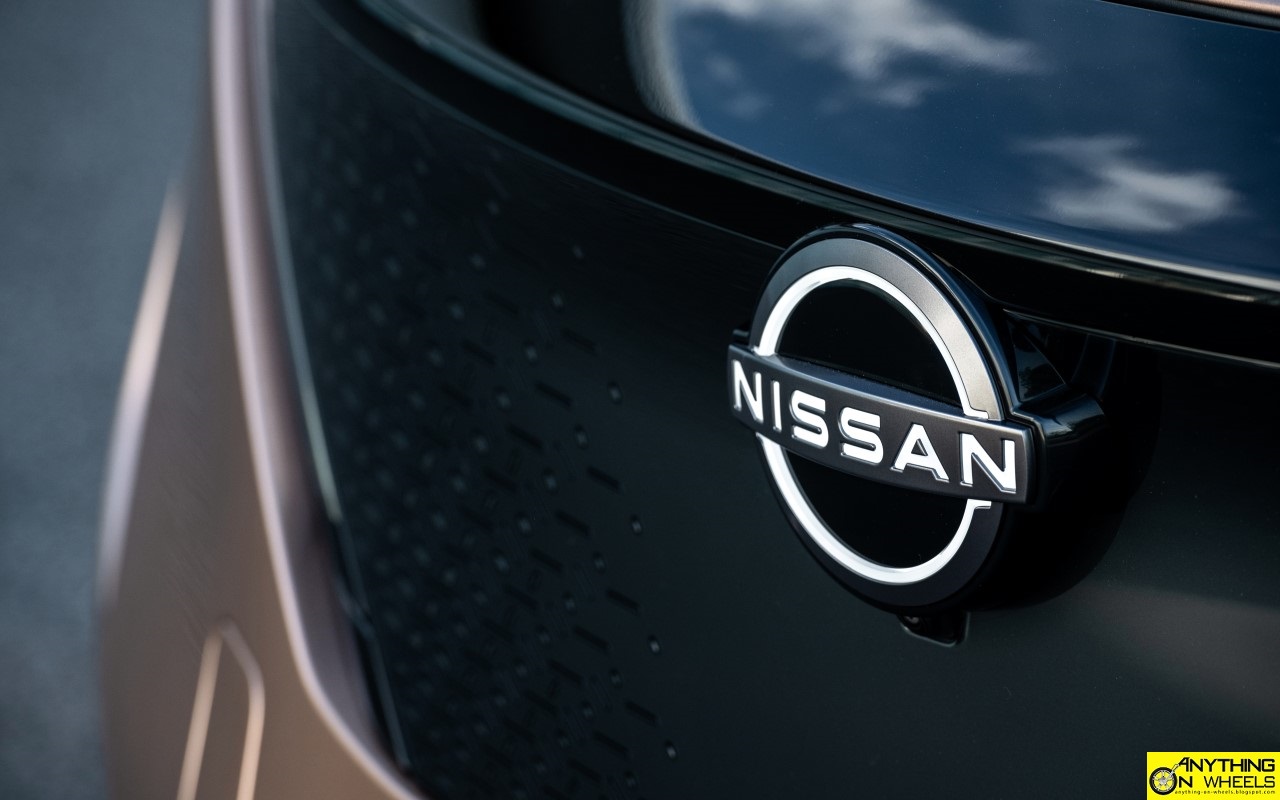
Nissan Ariya debuts with a new brand logo and identity


Nissan has been in the news for all the wrong reasons of late. This is not one of them. The Japanese car-maker took the wraps off it’s all-new, full-electric Ariya crossover and - along with it - a new brand identity. At first glance, there’s hardly anything to dislike. Has Nissan then hit the nail on its head? Let’s delve a bit and find out what’s good and what’s not so good about the Ariya. 

Good: Ariya oozes appeal inside and out

When Nissan brought in the Ariya Concept at the 2019 Tokyo Motor Show, it came across  the Ariya was shown in concept form at the 2019 Tokyo Motor Show, it came across as a sleek-looking crossover that looked contemporary without trying too hard. It's a good thing then the production model is literally unchanged from the concept. 


Up front, a dramatic-looking glossy black panel - called the 'Shield' - takes center stage, housing Nissan's illuminated new logo and a textured panel underneath. Thin headlights underlined by LED running lights that extend downwards into the grille can't be missed either. The curvy profile is characterized by a prominent shoulder line that runs end-to-end and wraps around the rear where a full-width panel houses dark-tinted taillights. The sloping coupe-like roof-line, rather large integrated spoiler and those sharply-raked C-pillars lend the Ariya a strong sense of dynamism.


If you thought that was impressive, the interiors elevate things further by a few notches. As is the norm these days, minimalism is the theme here with Nissan's designers doing away with most of the buttons and switches. Two 12.3-inch touchscreens for instruments and navigation are placed on top with a full-width trim housing air-conditioning vents below. The party trick here are the climate control functions that are housed in the wooden panel in the form of capacitive haptic switches. The stand-alone floor console between the front seats and the seamless integration of the dashboard with the door panels are the other highlights. 

Good: Nissan's EV head-start is a plus

When stand-alone Electric Vehicles from most rivals are still in their first generations, Nissan's Leaf is already in the second half of it's second generation. Launched way back in 2010, the Japanese brand's head-start in EVs gave its engineers a decade worth of experience to dig into. Its only fair to assume all that has been put to good use while working on the Ariya.


Two battery packs are available - a 63-kWh unit and a 87 kWh unit. Both of them can be had as two-wheel-drive or  four-wheel-drive models. The former will have a solitary motor powering the front wheels and producing 215 horsepower and 300 Nm of torque. The latter will have two motors using Nissan's e-4ORCE system to channel 389 horsepower and a massive 600 Nm of torque to all four wheels. With all that torque available from the get go and twin motors providing the required balance, the four-wheel-drive Ariya should be quick and quite a hoot to drive. 

The battery pack is placed quite low between the wheels for better Center of Gravity and is liquid-cooled unlike in the Leaf. Range for individual models hasn't been declared yet.

Not so good: Nissan has just hit the 'Reset' button

Thanks to a combination of internal politics, questionable decisions on certain models in the portfolio, lethargy in some markets and unwarranted expansion in others, the last few years have not been kind to Nissan. The folks at the helm took cognizance and hit the reset button with the so-called NEXT strategy that focuses on rationalization and prioritizing core markets and models. Announced along with it was a plan to launch 12 new models in 18 months. How's this not good, you wonder? That's because Nissan shouldn't have gotten to this stage in the first place and an EV like Ariya needs all the backing it could possibly get to make a difference against rivals of Tesla's calibre.


That said, it appears the recovery is on a fast track. In the last three months, an all-new Rogue (X-Trail in some markets) broke cover in the USA, Kicks got a refresh with an electrified powertrain in Japan and Thailand and here in India, Nissan unveiled the Magnite Concept that previews a compact SUV slated for launch in 2021. That brings us to the Ariya and the new brand identity that debuted alongside it. Did you notice the sleek and simplified Nissan logo etched proudly on the hood? Bodes well for the future of the brand, you think?

Good: Ariya is a tech tour-de-force

EV credentials aside, the Ariya comes loaded with a whole load of tech. For starters, the Ariya is capable of receiving over-the-air updates, the first Nissan ever to do so. The Japanese brand's advanced ProPILOT 2.0 driver assistance system is also part of the kit, offering hands-free driving capability under certain conditions with the help of twelve ultrasonic sonar sensors, seven cameras and five millimeter-wave radars. 

In addition, the Ariya is equipped with a full active safety net including ProPILOT Remote Park, Around View Monitor, Driver Monitoring System, Forward Collision Warning, Intelligent Emergency Braking and Rear Automatic Emergency Braking amongst others.


To summarize, Nissan couldn't have launched a better model for its ride back to the top of the game than this. The Ariya looks stylish, sports an in-demand 'crossover' body-style, has a fabulous cabin and gets top-notch tech and safety kit to go against credible rivals like the Tesla Model Y and Ford's upcoming Mustang Mach-E. Watch this space, things are really heating up!

20200714

Ford Bronco is back. And how!

When it was introduced in 1966, Ford Bronco was one of the pioneers of the body-style we call ‘SUV’ today. Over the next 30 years and five generations, the Bronco developed a cult following in the American market only to be axed in 1996. After a 24-year hiatus, the iconic nameplate returns later this year with Ford unveiling the all-new Bronco range last evening to satiate hordes of American fans and loyalists who were starting to get really impatient waiting for this reveal.

Going against the legendary Jeep Wrangler, the born-again Bronco has it’s task cut out. Is Ford’s newest model up for the challenge? What’s good about it? What could have been better? Let’s find out. 

Good: Bronco is now a sub-brand with 3 models


For most of it’s existence, the Bronco has been a standalone model. The Bronco II – that just shared the name but had completely different underpinnings and was made from 1980 to 1987 – was a notable exception. In it’s comeback though, the Bronco has grown into a whole sub-brand of sorts. The line-up comprises three models – the two-door Bronco, the first-ever four-door Bronco and the smaller Bronco Sport. None of them have the ‘Blue Oval’ logo up front. Instead, they have B-R-O-N-C-O written in a bold font across the grille. Bucking bronco logos are placed on the tailgate, steering wheel and gear-shifter, signaling the confidence Ford had in ‘Brand Bronco’.

While the two Broncos are hardcore, body-on-frame off-roaders built off the Ranger platform, the Bronco Sport is an Escape-based monocoque for those who prefer the boxy look and feel but prefer car-like dynamics and can do with limited off-road capability. With the trio, Ford has expanded the reach of Bronco to a wider customer base that a standalone two-door model would have struggled to impress.

Good: Bronco’s retro-modern styling works

Re-imagining an old classic is always an exercise akin to treading a thin line. A slip is all it takes to fall flat on your face. In that context, Ford’s designers have done a fab job with the new Bronco. 


The all-new Bronco looks faithful to the ‘classic’ 1966 model, yet is thoroughly contemporary. The boxy, squared-off looks with the wheels pushed off to the corners is macho, timeless and purposeful. The lighting signature up front, the nameplate writ large across the grille, the massively-flared and clad wheel arches, the A-pillar mounted rear view mirrors and frameless doors are the highlights. Both the two- and four-door models have modular roof sections and removable door panels , providing the occupants a quick and easy open air experience. 


The Bronco Sport carries over a lot of the traits of the bigger siblings but has it’s own distinct identity. Exclusively available with a fixed roof and four doors, the baby Bronco carries the family flag proudly in its front lighting signature, the way the grille’s enclosure encompasses the headlights and those shoulder lines that kinks up just before it meets the C-pillar. The C-pillar itself has a different treatment, not very dissimilar to some Land Rover models of the past.


The interiors look the part too. The design is straightforward, no doubt, but the colours chosen for the upholstery give these mud-pluggers a plush look while the optional 12-inch touchscreen infotainment system with the latest SYNC 4 makes this a tech-rich cabin.

Built Wild they may be, as Ford calls them, there is no denying the fact the Broncos are handsome brutes!

Good: Broncos are purpose-built G.O.A.T vehicles

No, the GOAT here isn’t what you think it is. It means “Go Over Any Terrain” - a phrase that fits the Bronco to the tee and was coined for marketing the 1966 model. Ford’s venerable SUV has always been manufactured with an intent to take it’s occupants to places a regular automobile can’t dare enter. That purpose hasn’t changed one bit. The new Bronco, just like it’s arch-rival Jeep Wrangler, is designed to shine off-road. Be it bashing dunes, climbing rocks, fording water bodies or tackling slush, the Bronco twins are game for it. 


With a spec sheet that reads 295 mm ground clearance, 43.2° approach, 29° ramp-over and 37.2° departure angles and 850 mm water-fording capability when equipped with the optional, factory-fitted 35-inch wheels, option of an electronic, shift-on-the-fly transfer case with a 2.71:1 low ratio or an advanced unit with a 3.06:1 low ratio, Dana AdvanTEK independent front differential unit and Dana 44 AdvanTEK solid rear axle, it is clear Ford has given the Broncos hardware worthy of the G.O.A.T tag. Even the Bronco Sport, looking at Ford’s press images and videos, appear to be quite capable off-road albeit to a much-lesser extent. Depending on the variant, Bronco can offer up to seven terrain modes, cheekily called GOAT modes – Normal, Eco, Sport, Slippery and Sand, Baja, Mud/Ruts and Rock Crawl!

Trail Toolbox, a cheekily-named suite of tech features, are on offer to further elevate the off-road experience. This includes Trail Control (cruise control for low-speed trail driving), Trail Turn Assist (four-wheel torque vectoring to tighten off-road turning radii) and Trail One Pedal Drive (acceleration and braking controlled through a single pedal for more precise and confident rock crawling).  


Complementing those impressive hardware and software bits are the many thoughtful touches inside the cabin. From front wheel-mounted cameras that relay output to the dash-mounted touchscreen to tackle those tricky off-road sections better to the well-positioned grab handles, those seatback-mounted MOLLE hooks, washable rubberized floors with integrated drains, marine-grade vinyl seating surfaces and the exclusive Trail Mapping System with over 1,000 curated trail maps, every single detail has been thought through.

Best part is, even the Bronco Sport can flex its muscles off tarmac and has the utility hacks to take your outdoor gear with you. Just don’t take it to places where you would a Bronco!

Good: Surprise, there’s a manual transmission!


The bigger Broncos have two engines on offer. The base is a 2.3-liter EcoBoost mill that churns out 270 horsepower and 420 Nm of torque. This engine can be paired to either a 7-speed manual transmission (6-speed manual with a crawler gear) or a 10-speed automatic transmission. For those who want more, the 2.7-liter EcoBoost V6 should do with its 310 horsepower and a whopping 542 Nm of torque. The V6 is exclusively mated to the 10-speed auto gearbox. 

The Bronco Sport carries over the 1.5-liter 3-cylinder EcoBoost engine that now delivers 181 horsepower and 258 Nm of torque. The top-end Badlands trim and the First Edition get an exclusive 2.0-liter 4-cylinder EcoBoost good for 245 horsepower and 372 Nm of torque. A 8-speed automatic transmission and four-wheel-drive hardware are standard across the range. 

Good: Bronco has a rich heritage


Many new cars are launched every month but not all of them have a rich heritage. Bronco, though, has one to be proud of. Sure, the Bronco has never been a big-seller – a fact it’s cumulative sales of just over 1.1 million units across three decades and five generations would allude to. But the way in which the Bronco weaved itself into the American car culture in the seventies and eighties set it apart. In fact, it was this trait that landed Bronco a legion of fans and loyalists who swore by it and made vintage Broncos hot properties in used car showrooms and auction lots. Though Ford hasn't explicitly stated, the Bronco Sport, too, can be considered the spiritual successor to the Bronco II that was made between 1984 and 1990.

If they play their cards right, Ford can build on this legacy to make the Bronco a super hit. So far, they are on the right track.

Good: There’s a Bronco for everyone


Taking a cue from Jeep, Ford is betting big on customization options for the Bronco. When the first models start reaching dealerships later this year, there would be over 200 Ford-backed aftermarket accessories including some factory-branded ones that customers can opt for. In addition to that, Ford claims hundreds of customization opportunities right off the line to make every Bronco out there unique and different to the rest. From different door designs to choose from to overhead-mounted, silicon-sealed accessory switches with pre-wired leads, the Bronco is ready off the factory to head to your favourite tuner.

The same extends to Bronco’s pricing too. With pricing that extends from $29,995 for the Base two-door variant and goes all the way up to $64,995 for the four-door “First Edition”, there is a Bronco for everyone, literally! The smaller Bronco Sport has a more acceptable pricing delta – starting at $28,155 for the Base variant and ending at $39,995 for the ‘First Edition’.   

Not so good: Is Bronco late to the Jeep party?


Now, this is a tough one. Being one of the first SUVs ever made, Bronco had a head start no other rival could dream of. Jeep, of course, is an exception but remember, the Wrangler wasn’t called a Wrangler back then. In that sense, Bronco should have been the oldest SUV in production had Ford not stopped the model in 1996. Between then and now, demand for SUVs and high-riding wannabe SUVs (crossovers, in other words) shot through the roof with every car-maker building many of these to keep their cash registers ringing. Some, like Ford, have even taken a bold stance to cull every one of their cars and focus only on SUVs and crossovers. 

All this while, Jeep made merry with the Wrangler firmly establishing itself as the de-facto choice for hardcore off-roading enthusiasts. That’s the same set of folks the Bronco is out to impress now. Ford, without a doubt, is late to this duel.


Overall, Ford has hardly put a foot wrong so far with the Bronco. Yes, they could have launched this a few years ago but it's better late than never.

If the interest shown for the numerous leaks and hundreds of articles on Bronco’s resurrection since the news leaked out in 2015 is anything to go by, the Bronco is well-armed to take the Wrangler head-on. Watch this space, this is going to be epic!