20131004

The all-new Bentley Flying Spur goes on sale in India


Of late, India’s uber-rich clientele, a small but rapidly expanding group with potential to multiply in the not so distant future, is turning out to be a lucrative market for global luxury-car manufacturers. That is what is pushing brands as diverse as Rolls-Royce and Koenigsegg to establish a strong foothold in the Indian market. Bentley is no exception. Delhi-based Exclusive Motors is the official dealer representing and retailing the automobiles crafted at Bentley’s facility in Crewe, England.

The all-new Flying Spur that made its global debut earlier this year is now officially on sale in India, joining a lineup that includes the popular Continental series. Retailing at INR 3.10 Crores, the Bentley Flying Spur has no competition except for the Rolls-Royce Ghost, that retails at similar prices and targets the same set of customers.


For us, the Flying Spur has always been one of the finest looking sedans ever made and the new model does nothing to change that opinion. As with most high-end automobiles these days, the lights are the center of attraction in the Flying Spur. While the twin circular lights complement the massive radiator grille up front, the elliptical taillights ensure that the Flying Spur looks majestic from all angles.

Available in four and five-seat configurations, the interiors of the Flying Spur, like all other Bentleys, are handcrafted from the finest quality of leather, wood and chrome. With every possible creature comfort and safety feature on offer, the new Flying Spur’s center of attraction is a touchscreen controller at the rear that’s capable of controlling everything from the seats and air-conditioning to the multimedia entertainment and navigation system.


With a 6-liter twin turbocharged W12 engine powering all four wheels, the Flying Spur boasts a maximum power of 616 bhp and a peak torque of 800 Nm. Those figures are nothing short of mind-boggling and are capable of pulling the Flying Spur from 0 to 100 km/h in just 4.6 seconds to a top-speed of 322 km/h. We wish India had the roads where this monster could be unleashed.

In any case, for those who can afford it, the new Bentley Flying Spur offers a compelling combination of luxury, speed, style, image and practicality that's hard to resist.

20131003

Skoda relaunches 'Octavia' nameplate in India

The first-generation Octavia was a surprise hit for Skoda, an hitherto unheard brand in India. Coming in at a time when premium cars from new brands failed to make an impact in the conservative Indian mindset, the Octavia broke the notions associated with our market. Playing the cards of good value for money and excellent fuel-efficiency, two virtues that Indians crave for, the Octavia hit the sweet spot and firmly established Skoda as a luxury brand in India. The Octavia was such a big hit that Skoda continued to sell the car alongside the second-generation model that was unimaginatively named as Laura.


With the launch of the third-generation model today, the Octavia nameplate is making a comeback in India after an absence of three odd years. Skoda is betting big on this model, which is evident from the fact that the new Octavia is available in three trim levels (Active, Ambition and Elegance) with a mix of three engine and three transmission options.

The Active and Ambition variants are powered by the 1.4-liter TSI engine that produces 140 PS of maximum power and 250 Nm of peak torque. The top-end petrol variant Elegance is more powerful with 180 PS of maximum power, thanks to the 1.8-liter TSI engine that's mated to a 7-speed DSG dual-clutch automatic transmission. The diesel variants are powered by the familiar 2.0-liter TDI engine that belts out 143 PS of power and 320 Nm of torque. While the base Active variant comes only with a manual transmission and the top-end Elegance variant comes only with a 6-speed DSG automatic transmission, the Ambition variant comes with a choice of either of these transmissions.


Prices for the petrol variants are INR 13.95 Lakhs (Active), 14.95 Lakhs (Ambition) and 18.25 Lakhs (Elegance). The diesel variants retail for INR 15.55 Lakhs (Active), 16.55 Lakhs (Ambition), 17.55 Lakhs (Ambition AT) and 19.45 Lakhs (Elegance). All prices are ex-showroom Delhi. At these prices, the Skoda Octavia is no longer the segment benchmark for value for money as it once used to be. In fact, the new Octavia is more expensive than the Volkswagen Jetta, which is surprising given the fact that Volkswagen is positioned as a premium brand in India.

To justify its pricing, Skoda has kitted the Octavia decently. Antilock Braking System (ABS), dual airbags, 16-inch alloy wheels, power mirrors, power windows, traction control, driver's seat height adjust, steering adjust, remote locking and rear air-conditioner vents are standard across the range. The flagship Elegance variant is fully loaded and boasts bi-xenon headlamps, six airbags, stability control, panoramic sunroof, cruise control, an electronic differential lock for the front axle, a touchscreen audio system with steering-mounted controls, dual zone climate control, stability control, multi-collision braking system that automatically stops the car if the driver's foot is off the brake pedal after a crash and automatic headlamps and wipers amongst other features.


Based on Volkswagen group's popular 'MQB' platform that spans a host of models in as much as four brands, the new Octavia boasts solid underpinnings.

It was the Octavia's reach that established Skoda as a luxury brand in India, quite contrary to it's budget image in rest of the world. With the launch of the all-new Octavia, Skoda is trying to capitalize on the image and legacy of the old model. Will the Octavia do what the Jetta couldn't and dethrone Hyundai Elantra from the top? Let the game begin.

20130922

2013 Frankfurt - BMW i8 plug-in hybrid sports-car makes its global debut


Just over a month back, BMW announced the introduction of its ‘i’ sub-brand by launching the i3 hatchback simultaneously in New York, London and Shanghai. In a relatively-subdued affair at the recently-held Frankfurt Motor Show in Germany, BMW took the wraps off the i8, a stunning, plugin hybrid sports-car that follows the i3 as the second model in the tech-savvy ‘i’ lineup. It looks like BMW is trying to make a point here that ‘green’ cars can actually be ‘fun to drive’ and need not be ‘mundane’ as they are stereotyped today.


Proving that point more than anything else is the styling of the i8. The car looks absolutely smashing and we are sure that the i8 will leave onlookers spellbound when it gets going on public roads. The low-slung front-end looks menacing and the glossy black finish of the kidney grille adds to the appeal. The profile is characterized by the ‘floating’ C-Pillar that stops short of converging with the strong shoulder lines that creep up from the bottom of the doors on either sides. The way in which the C-Pillars flow into the split-spoiler-like structures at the rear is incredible. Together with the matching taillight clusters and the two-tone rear bumper, the i8 makes a strong design statement. With a drag coefficient of just 0.26, the i8 has also got to be one of the most aerodynamic cars on earth.


A 1.5-liter, 3-cylinder, Twin-Power turbo-charged gasoline engine with 231 HP of peak power and 320 Nm of peak torque powers the front wheels of the i8. With almost all of its mainstream models driven by the rear wheels, this decision of BMW to go for front wheel drive configuration in its sports car is weird. As if to make up things, an electric motor that develops 131 HP of power and 250 Nm of torque on its own drives the rear wheels of this car. With both of them working in parallel, the i8 boasts statistics of 362 HP and 570 Nm that’s capable of propelling the car from 0 to 100 km/h in 4.5 seconds and onwards to an electronically-limited top speed of 250 km/h.


Just like the i3 hatchback, the i8 was conceived from the ground up as a plug-in hybrid sports car and, as such, has the attributes of performance and efficiency built into it. The amount of research and development put in by BMW over the years has resulted in the unique ‘Life Drive’ architecture that has been designed exclusively for the ‘i’ sub-brand and consists of two individual modules. The “Life Module” is essentially the passenger cell that’s made of Carbon Fiber Reinforced Plastic (CFRP), while the “Drive Module” that’s made of aluminium comprises of the combustion engine, the electric motor, the battery pack and the structural and crash components of the car. The interiors are made out of materials as diverse as magnesium and recyclable Poly Ethylene Terephthalate (PET). The choice of materials has been dictated by twin goals of weight reduction and sustainability.

With such a pleasing combination of styling, technology, power, speed, handling and efficiency, there is no reason for the BMW i8 to not succeed globally. As for us, we were already smitten when we saw the prototype of the i8 in action in the Hollywood blockbuster Mission Impossible : Ghost Protocol. Its time for us to get ready to be smitten again, this time in real!

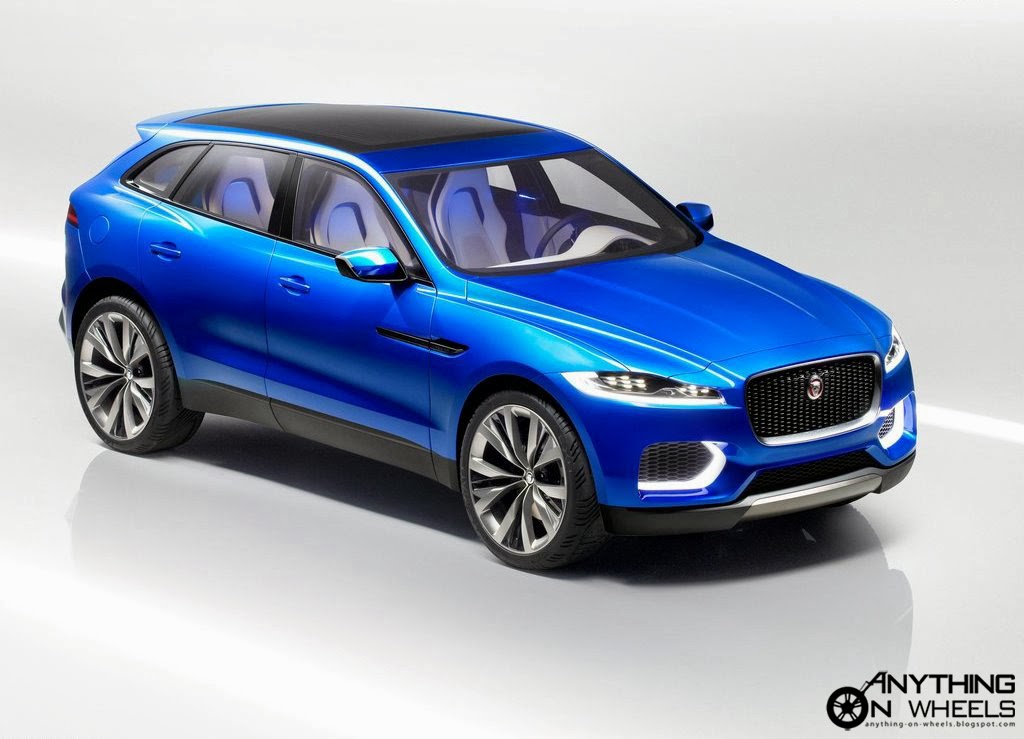
2013 Frankfurt - Jaguar C-X17 Concept previews the British brand's first crossover

This could be the most definitive moment in Jaguar’s recent history since the famous British luxury car-manufacturer was acquired by Tata Motors. That sounds a bit exaggerated we know, but looking at what crossovers did for its competitors, that statement could eventually turn out to be true. Ending months of speculation, Jaguar finally unveiled the C-X17 Concept, its first ever crossover, at the recently concluded Frankfurt Motor Show. Glowing in the spotlights of the popular German city, the C-X17 Concept previewed the design direction of the brand’s first crossover that’s expected to join the lineup in the not-so-distant future.


As evident from the pictures, the C-X17 Concept is instantly recognizable as a Jaguar as it borrows prominent design cues from other Jag models. The thin headlights featuring multiple clusters of LEDs and the bold trapezoidal wire mesh grille are very similar to those found in the XF and XJ sedans, while the superbly-shaped taillight clusters are an ode to the gorgeous F-Type roadster. The strong creases in the hood combined with the broad shoulders give the Jag crossover an imposing stance. Though this is labeled a concept, let’s not be kidding ourselves that the production model won’t look like this. And if it does, the fact that Jaguar got the styling so right with most of the family design elements imbibed is an achievement in itself. Remember, a few other luxury car brands couldn’t do that the first time.


In what is a total contrast to the exteriors, the interiors are pure concept car stuff and none of the flashy stuff in the show car is likely to make it to production. Who is going to complain anyway, if the crossover sports interior appointments similar to the existing Jag models?


Also debuting in the concept is the company’s new advanced aluminium architecture that will span a range of future Jaguar models, including the upcoming midsize sedan that will end up locking horns with the compact luxury sedans from Germany. This uni-body platform is modular and scalable and reinforces Jaguar’s commitment towards the lightweight material. Let’s not forget that the previous generation XJ rose to fame with its all-aluminium construction. With multiple benefits in the form of increased rigidity and stiffness in a light weight chassis, Jaguar, like many fellow automotive manufacturers, believes that aluminium is the way to go and rightly so.

With sister brand Land Rover focusing on hardcore off-roaders, it makes perfect sense for Jaguar to venture into the crossover segment and make some quick bucks. Looking at this concept, the leaping cat is all set to pounce!

20130904

BMW launches 1-Series hatchback in India

After a couple of teasers that were aimed at snatching the limelight from the hot and happening Mercedes-Benz A-Class, BMW has now launched the 1-Series, its smallest and most affordable model yet, in the Indian market. To be assembled in the company's Chennai facility, the 1-Series will be a shot in the arm for BMW that has not only lost its lead but also been relegated to the last spot among the three big players in the Indian luxury car market.


The 1-Series is available in 4 variants. The base 116i is powered by a 1.6-liter TwinPower turbocharged petrol engine that churns out 136 bhp of power and 220 Nm of torque. Don't be fooled by the engine displacement. This car can accelerate from 0 to 100 km/h in just 8.7 seconds. All the other variants are powered by the 2.0-liter TwinPower turbocharged diesel engine that also does duty in 3-Series, 5-Series, X1 and X3 in varying levels of tune. With a rated power of 143 bhp and torque of 320 Nm, the diesel variants can reach 100 km/h from standstill in 8.6 seconds. Both the engines are mated to a 8-speed automatic transmission that transfers the power to the rear wheels. This bodes well for the enthusiasts amongst us, as rear wheel drive means a whole lot of fun every time we sit behind the wheel.


While the 116i is priced at INR 20.90 Lakhs, the diesel variants are priced at INR 22.90 Lakhs (118d), INR 25.90 Lakhs (118d Sport) and INR 29.90 Lakhs (118d Sport Plus). All the prices are ex-showroom and valid across all authorized BMW showrooms in the country. Unlike Mercedes-Benz that has just one variant of the A-Class each with a petrol and diesel engine, BMW has went all out with prices varying by a whopping INR 8 Lakhs between variants. Despite being assembled locally, the 1-Series, surprisingly, is more expensive than the A-Class which is it's sole competitor that's imported into India as a Completely Built Unit (CBU).


Safety isn't compromised in any variant, as the 1-Series range has 6 airbags, Anti-lock Braking System (ABS), Cornering Brake Control (CBC) and Dynamic Stability Control (DSL) with Dynamic Traction Control (DTC). The top-end 1-Series is fully loaded  and carries features such as rear-view mirrors with anti-dazzle function, xenon headlights, electrically adjustable seats with memory function, iDrive infotainment system with a 16.5cm colour display and a host of external touches that are aimed at enhancing the style quotient. While the features gradually reduce as we move down the pecking order, the price difference of INR 8 Lakhs between the lower and upper variants is alarmingly high.

While the 1-Series does look a bit aggressive like all other BMW models, it isn't going to grab eyeballs like the A-Class does. The uniquely-shaped headlight clusters combine with the kidney grille in perfect harmony. The profile is long and muscular with a horizontal character line running along the door handles. At the rear, we see traces of Volkswagen Polo in there.

By rushing up the launch of the 1-Series, BMW has ensured that Mercedes-Benz doesn't enjoy the first-mover advantage for long. Will the 1-Series, with the fun factor associated with its rear wheel drive configuration and more powerful and exciting engine options, dethrone the A-Class? What effect is Audi's proposed entry into the compact luxury segment going to have on the 1-Series and the A-Class? Let's wait and watch as this interesting episode unfolds.