Showing posts with label Electric Cars. Show all posts

20200905

A trio of EV crossovers have started India's electric car revolution

It might take years (or even decades!) before electric cars push over their internal combustion engine counterparts in India but the foundation for that to happen is well and truly set. And a trio of electric crossovers - or SUVs, as some call them - are driving this change.

Tata's Nexon EV, MG's ZS EV and Hyundai's Kona Electric have managed what Mahindra Electric - despite it's 10-year head-start - couldn't. Yes, Mahindra took over the erstwhile Reva Electric Car Company in 2010! Reva, lest you forget, has been around for even longer with Chetan Maini launching his pint-sized toy-ish electric car way back in 2001. What a lead this, to be squandered!

Let's get back to this trio. Their success hinged on their ability to garner the attention of the car-buying public by legitimately staking claim as 'no-compromise' urban run-abouts. That they managed to do it overcoming monumental challenges like lack of charging infrastructure, limited awareness and range anxiety is remarkable.

Look at their spec sheets and you'll know why I called them 'no-compromise' offerings.

The Nexon EV is the most-affordable and consequently the top-seller of this bunch with Tata recently celebrating the roll-out of 1000th Nexon EV. Priced between INR 13.99 - 15.99 Lakhs, the Nexon EV has a 30.2 kWh battery with an ARAI-certified range of 312 km on a single charge. Plugged into a regular 15A socket, the Nexon EV would bump it's battery up from 10 to 90% in 8.5 hours. With CCS2 fast charging, it would take just an hour for the battery to go from 0 to 80%. Even assuming an usable real-world range of just over 200 km, the Nexon EV has hit a sweet spot in the price-range equation. That, along with it's funky looks, class-leading safety and solid build, enhances the Nexon EV's appeal.

The other two are more closely matched and a cut above the Tata, both in terms of pricing and specifications. Surprisingly, it's MG that won against Hyundai's might.

Hot on the heels of Hector's success, MG launched the ZS EV in India with ex-showroom prices ranging between INR 19.88 - 23.58 Lakhs. Equipped with a bigger 44.5 kWh battery and an ARAI-certified range of 340 km, the ZS EV gets multiple charging options. The portable charger that comes along with the car can be plugged into any 15A socket and takes 16-18 hours to juice up the battery from 0 to 80%. The same can be done in 6-8 hours by opting for AC fast chargers and just 50 minutes with DC fast chargers installed in MG dealerships. Road Site Assistance facility for mobile charging support is also available in case of an emergency. The ZS EV's appeal lies in it's all-round capability. Good-looking? Check. Feature-loaded? Double check. Panoramic sunroof? Hell yeah!

That brings us to the Kona Electric, India's first EV crossover and the first-ever EV in the country that offered range in excess of 100 km when it was launched just over a year ago. With a pan-India ex-showroom price of INR 25.30 Lakhs, the Kona Electric has a 39.2 kWh battery with an ARAI-certified range of 452 km. In real-world conditions, that could drop to a little over 300 km, still a mighty impressive number. Time taken to recharge the battery to 100% is a little over 6 hours with an AC charger. Just like MG, Hyundai provides fast-charging DC charges and emergency mobile charging support. It's quirky styling and relatively higher pricing apart, there's nothing quite to fault with the car. The Kona Electric would have sold in higher numbers if MG had not stolen the limelight from the Hyundai within months of it's launch. That the Kona Electric is in high demand globally doesn't help either with allocation to Hyundai India apparently hard to come by.

With all three tasting success, it's clear Indians aren't averse to owning electric cars. Give us an EV that isn't a compromise and were prepared to put our money on it. Hyundai, MG and Tata have effectively ensured other car-makers don't have to think twice to launch their EVs in India. So, who's next then?

20200720

Nissan Ariya debuts with a new brand logo and identity


Nissan has been in the news for all the wrong reasons of late. This is not one of them. The Japanese car-maker took the wraps off it’s all-new, full-electric Ariya crossover and - along with it - a new brand identity. At first glance, there’s hardly anything to dislike. Has Nissan then hit the nail on its head? Let’s delve a bit and find out what’s good and what’s not so good about the Ariya. 

Good: Ariya oozes appeal inside and out

When Nissan brought in the Ariya Concept at the 2019 Tokyo Motor Show, it came across  the Ariya was shown in concept form at the 2019 Tokyo Motor Show, it came across as a sleek-looking crossover that looked contemporary without trying too hard. It's a good thing then the production model is literally unchanged from the concept. 


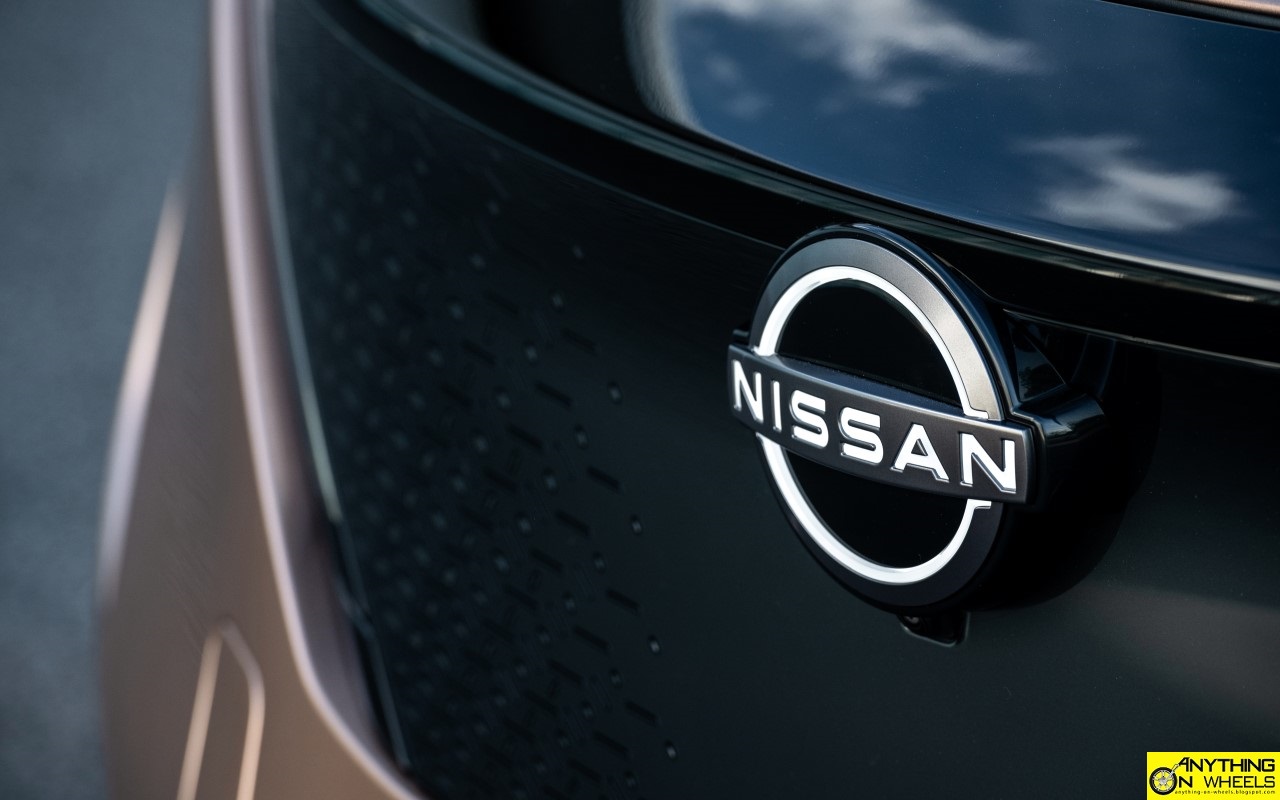
Up front, a dramatic-looking glossy black panel - called the 'Shield' - takes center stage, housing Nissan's illuminated new logo and a textured panel underneath. Thin headlights underlined by LED running lights that extend downwards into the grille can't be missed either. The curvy profile is characterized by a prominent shoulder line that runs end-to-end and wraps around the rear where a full-width panel houses dark-tinted taillights. The sloping coupe-like roof-line, rather large integrated spoiler and those sharply-raked C-pillars lend the Ariya a strong sense of dynamism.


If you thought that was impressive, the interiors elevate things further by a few notches. As is the norm these days, minimalism is the theme here with Nissan's designers doing away with most of the buttons and switches. Two 12.3-inch touchscreens for instruments and navigation are placed on top with a full-width trim housing air-conditioning vents below. The party trick here are the climate control functions that are housed in the wooden panel in the form of capacitive haptic switches. The stand-alone floor console between the front seats and the seamless integration of the dashboard with the door panels are the other highlights. 

Good: Nissan's EV head-start is a plus

When stand-alone Electric Vehicles from most rivals are still in their first generations, Nissan's Leaf is already in the second half of it's second generation. Launched way back in 2010, the Japanese brand's head-start in EVs gave its engineers a decade worth of experience to dig into. Its only fair to assume all that has been put to good use while working on the Ariya.


Two battery packs are available - a 63-kWh unit and a 87 kWh unit. Both of them can be had as two-wheel-drive or  four-wheel-drive models. The former will have a solitary motor powering the front wheels and producing 215 horsepower and 300 Nm of torque. The latter will have two motors using Nissan's e-4ORCE system to channel 389 horsepower and a massive 600 Nm of torque to all four wheels. With all that torque available from the get go and twin motors providing the required balance, the four-wheel-drive Ariya should be quick and quite a hoot to drive. 

The battery pack is placed quite low between the wheels for better Center of Gravity and is liquid-cooled unlike in the Leaf. Range for individual models hasn't been declared yet.

Not so good: Nissan has just hit the 'Reset' button

Thanks to a combination of internal politics, questionable decisions on certain models in the portfolio, lethargy in some markets and unwarranted expansion in others, the last few years have not been kind to Nissan. The folks at the helm took cognizance and hit the reset button with the so-called NEXT strategy that focuses on rationalization and prioritizing core markets and models. Announced along with it was a plan to launch 12 new models in 18 months. How's this not good, you wonder? That's because Nissan shouldn't have gotten to this stage in the first place and an EV like Ariya needs all the backing it could possibly get to make a difference against rivals of Tesla's calibre.


That said, it appears the recovery is on a fast track. In the last three months, an all-new Rogue (X-Trail in some markets) broke cover in the USA, Kicks got a refresh with an electrified powertrain in Japan and Thailand and here in India, Nissan unveiled the Magnite Concept that previews a compact SUV slated for launch in 2021. That brings us to the Ariya and the new brand identity that debuted alongside it. Did you notice the sleek and simplified Nissan logo etched proudly on the hood? Bodes well for the future of the brand, you think?

Good: Ariya is a tech tour-de-force

EV credentials aside, the Ariya comes loaded with a whole load of tech. For starters, the Ariya is capable of receiving over-the-air updates, the first Nissan ever to do so. The Japanese brand's advanced ProPILOT 2.0 driver assistance system is also part of the kit, offering hands-free driving capability under certain conditions with the help of twelve ultrasonic sonar sensors, seven cameras and five millimeter-wave radars. 

In addition, the Ariya is equipped with a full active safety net including ProPILOT Remote Park, Around View Monitor, Driver Monitoring System, Forward Collision Warning, Intelligent Emergency Braking and Rear Automatic Emergency Braking amongst others.


To summarize, Nissan couldn't have launched a better model for its ride back to the top of the game than this. The Ariya looks stylish, sports an in-demand 'crossover' body-style, has a fabulous cabin and gets top-notch tech and safety kit to go against credible rivals like the Tesla Model Y and Ford's upcoming Mustang Mach-E. Watch this space, things are really heating up!

20200611

Tesla creates history, becomes the world's most-valued car-maker

Who would have thought when they were founded in 2003 that Tesla would become the world's most-valued car-maker in less than two decades? Yet, here we are in 2020, amazed by the fact the American EV manufacturer surpassed Toyota, albeit for a brief period on June 10, 2020, to become the automotive brand with the highest market cap! This, ladies and gentlemen, is history being created.


Tesla's share prices have been rallying for quite some time now, as the car-maker announced successive quarters of profits after years of losing money. With prices rising above $1,000 a share, Tesla's valuation stood at a staggering $188 billion yesterday! With this, Toyota, the world's largest car-maker by volume, slipped to second position with a valuation that was just over $180 billion on the same day.

It's quite an irony Toyota invested in Tesla over a decade back and even jointly developed Battery Electric Vehicles briefly before going on to sell their stake. We can't help but think of the billions of dollars the Japanese car-maker lost by not retaining them.


Incredibly, Tesla overtook Volkswagen - valued just shy of $80 billion - just a few months ago! Is this meteoric rise of Tesla in the share market a sign of things to come?

Armed with a 'S3XY' model line-up, rapidly rising deliveries of the Model 3, the planned ramp-up of Model Y, the Semi beginning mass production end of the year and the crazy Cybertruck slated to join a couple of years down the line, you would be hard-pressed to bet against Tesla.


Here's the list of Top 10 car-makers by market cap, as of early hours June 11, 2020.


Source: reddit.com/user/brandude87

Take these stock prices with a spoonful of salt as they can, at times, be crazy. How else can you describe something that places Nikola - a start-up that hasn't manufactured a single automobile yet - at Number 11, ahead of industry biggies like Nissan, FCA and Hyundai?

Watch this space. Things could get really interesting over the next couple of years.

20200205

2020 Auto Expo - Tata steals the show with the Sierra EV Concept

Years ago, way back in 2013 to be precise, Anything-On-Wheels had posted about the erstwhile Tata Sierra. While the views on how far ahead of it’s time the car was and how the design would look cool even today was well-received, it seems the post and its content caught the attention of the folks at Tata Motors too. Yes, Tata hogged all the limelight at the 2020 Auto Expo in New Delhi with the surprise unveiling of the Sierra Concept!


The best part about the Sierra Concept is not it's striking looks. Rather, it is the way this concept pays tributes to the iconic design elements from the Sierra of yesteryear whilst blending modern touches from Tata’s current-day “Impact 2.0” design language. The 3-door layout of the original Sierra, for instance, wasn’t practical but the large windows that went up to the roof on either side gave the car terrific aesthetic appeal. Under Pratap Bose’s inspiring design leadership, the folks at Tata have not just managed to retain those tall and large windows but also gave the rear passengers a sliding door on the left side to get in and out. The driver’s side, on the other hand, is clean with a greenhouse that mimics the old Sierra.


The way Tata transformed the Nexon and 45X Concepts into Nexons and Altrozs we see in the brand’s showrooms today, don’t be shocked if the Sierra sees the light of the day retaining the concept’s striking form. Of course, expect the lights to grow in size, the wheels to be downsized, the rear-view cams to make way for conventional mirrors and the flush-fitted door handles to be shown the door before the car reaches production. The cabin is clearly an enthusiastic individual's imaginations running wild, like we always see in auto show concepts!


Based on the 'Agile Light Flexible Advanced' Architecture (ALFA), the 4.1-meter long Sierra is touted to be an Electric Vehicle. While the battery size, specifications and range haven’t been announced, it makes tremendous sense for Tata to bring this back as an EV, given the Sierra would be an eye-candy and an image-booster for the brand! 

The Sierra Concept apart, Tata had a busy day at the Auto Expo with the premiere of the HBX Concept and the launch of updated Harrier with a power bump and much-awaited automatic transmission. The rest of the range – Tiago, Tigor, Altroz, the upcoming Altroz EV, Nexon, the just-launched Nexon EV, Harrier, Hexa and the soon-to-be-launched Gravitas – were on display too.

20200202

Hummer is coming back as a GMC EV!

Hummer - GM's iconic and controversial brand - known for it's boxy, go-anywhere civilian SUVs that trace their roots to hardcore military vehicles, is coming back. This time, as an 'Electric Vehicle' wearing a GMC badge.


Are you surprised? I'm not, one bit! At a time when SUVs and high-riding crossovers of all shapes and sizes are the rage worldwide, the fact Hummer wasn't brought back already was the bigger surprise. Now that the inevitable has happened, GM is just making sure Hummer comes prepared for the future. And that future, as the bosses at GM themselves declared, is electric!


The sole teaser image released by GM shows the GMC Hummer EV sports familiar design cues. The seven vertical slats, for instance, is a Hummer trademark. While they usually form a chrome-plated radiator grille, the space between those slats are back-lit this time with H.U.M.M.E.R proudly written on them. Don't miss the small 'EV' suffix at the end and the GMC moniker that's placed further down the bumper. Linking this to the silhouette GM released a week back, it's clear GM isn't heading the Tesla route and the Hummer EV will look like pick-ups of today.

While details on the power-pack aren't available as yet, GM released a trio of stats to keep our interests piqued. And yes, with claims of up to 1000 horsepower,  15590 Nm of torque (presumably at the wheels) and a 0 to 100 km/h sprint in 3 seconds, they've done that successfully!

All set for an unveil May 2020, the GMC Hummer EV will be made at GM's Detroit-Hamtramck plant that recently saw investments to the tune of over $2 billion to exclusively build a slew of electric and autonomous vehicles. 

While there are no EV pick-up trucks on sale right now, the Hummer will have lots to tackle when it goes on sale towards the end of next year. Rivals include Rivian's R1T, Ford's F150 Electric, Tesla's Cybertruck and Bollinger's EV amongst others.


At it's peak, Hummer's portfolio included the monstrous H1, the slightly-smaller H2, the even-smaller H3 and a pick-up spun off the latter dubbed the H3T. Imagining these gas-guzzlers as non-polluting EVs might be sacrilege to aficionados of the brand but that's probably the only way the business case to bring back Hummer could work for GM.

20191128

Tesla stings with the polarizing Cybertruck

When Tesla unveiled the Cybertruck at the sidelines of the Los Angeles Auto Show last week, the collective reactions of those attending the event and watching the live-stream online were - to put it mildly - "What the hell is that?" If someone is telling you that wasn't the case, they're either lying or they must be as crazy as Elon Musk and his team.


The Cybertruck, Tesla claims, has better utility than a truck with more performance than a sports car. That it doesn't look like a truck is a different thing altogether. 

With a polarizing design that sent the internet into a dizzy this past week, the Cybertruck is truly one-of-a-kind. We have never seen a truck like this. And we might never see one like this ever! The Cybertruck's beauty (Damn, we used that word!) is in not letting us decide if we like or detest the way it looks. 


It's clear Tesla wanted to stand out to have a chance at success in a segment that's crowded with big, brawny, gas-guzzling, body-on-frame trucks that loyal customers bought by the millions over multiple generations. And the folks from Fremont, California have executed that to perfection. They have got the internet - and the whole world - talking which wouldn't have happened with a run-of-the-mill design that looks like any other truck. The Cybertruck's 'Indestructible Isosceles Triangle on Wheels' lacks flair, no doubt, but you really can't deny it looks rugged and tough. Tesla's newest Electric Vehicle looks ready to scale Martian landscape (Now you know why Space X wants to take people to Mars!).


Available to order in three variants - Single Motor, Dual Motor and Tri Motor, the Cybertruck can go anywhere between 250+ to 500+ miles depending on the variant. Likewise, acceleration from 0 to 60 miles per hour can take anywhere between an incredible 2.9 seconds or a reasonably quick 6.5 seconds. The newest Tesla is no slouch when it comes to towing either with a claimed ability to haul between 7,500 to 14,000 pounds behind it!


Tesla has released just one shot of the Cybertruck's interiors which shows a minimalistic cabin dominated by a 17-inch touchscreen that controls everything and ample space for six in a 3+3 configuration. 

With a body shell that's made of ultra-hard, cold-rolled stainless steel and a shape that's devoid of curves, Tesla is headed an unknown path. The so-called 'Exoskeleton' might not just help customers save money by eliminating dents, damage and corrosion but also help the car-maker save millions by reducing production complexities. That's not all. The American car-maker has equipped the Cybertruck with an adaptive air suspension, Armor Glass for the windows, lockable tonneau cover for the bed and even on-board power and compressed air for those adventure outings.


As of today, Tesla has garnered over 250,000 deposits of $100 each to get in the queue to get one of these when its finally made and shipped a year or two down the line. That's a cool 25 million dollars of crowdfunding to work on the Cybertruck. If only other car-makers learnt the trick from Tesla, the automotive industry wouldn't be in the state it is right now!

20190713

Hyundai launches the Kona Electric in India

| Kona Electric becomes India's first long-range EV |

| Pan-India introductory ex-showroom price of ₹2,530,000 |

We have had a few full-electric cars launched in India already but they have all had a serious limitation or two that prevented them from being serious contenders. The Reva and it's many siblings were too small, unsafe and impractical. With the same technology underneath, Mahindra Electric's eVerito solved the space issue but it was dated and it's range was limited. Tata's Tigor EV, though modern and safe, is crippled by it's limited range too. Both the Mahindra and the Tata offer a range in the thereabouts of 100 km which does nothing to deter the range anxiety these EVs are notorious for!

In short, Hyundai's Kona Electric - launched in the country earlier this week at a pan-India introductory price of ₹2,530,000 ex-showroom - is India's first proper long-range EV!


With a 39.2 kWh battery that powers an electric motor rated for 134 horsepower and 395 Nm of torque, the Kona Electric is quite powerful. And it's fast too, accelerating from 0 to 100 km/h in 9.7 seconds. Four driving modes - Eco, Eco+, Comfort and Sport are on offer as are paddle shifters to adjust regenrative braking. 

Crucially, the Kona Electric has an ARAI-certified range of 452 km on a single charge. In real-world conditions, expect that number to drop down to about 300 km. The claimed time to recharge the battery to 100% with an AC charger is 6 hours and 10 minutes. With a DC quick charger, the battery can be recharged to 80% of its capacity in just 57 minutes. All Kona customers would be provided with a 7.2 kW charger that can top-up the vehicle's battery withan an hour for a range of 50 km.

The Kona Electric is on sale in 11 Indian cities in select Hyundai dealerships. All of them would be equipped with the aforementioned 7.2 kW AC chargers. That apart, Hyundai has joined hands with Indian Oil Corporation Limited to install a charging network in Delhi, Mumbai, Bengaluru and Chennai. Hyundai is leaving no stone unturned to deter the range anxiety. There will also be a fleet of cars fitted with power converters to provide emergency charging support in these cities. 

The Kona Electric comes with a 3 years / unlimited km warranty with the battery getting a separate 8 years / 160,000 km warranty. That's another concern every EV buyer has ticked off!


With a modern-yet-quirky design language highlighted by the split light clusters at the front and rear, the fake grille-like thing on the fascia, those bulky plastic claddings and the busy profile with multiple cuts and creases, the Kona is an eyeball-grabber. That said, it's a love-it or hate-it affair! Interiors are a typical Hyundai affair with the Kona Electric getting a ton of features and acceptable levels of fit and finish. 


The kit on offer include six airbags, Anti-lock Braking System (ABS) with Electronic Brake-force Distribution (EBD), Electronic Stability Control (ESC), Vehicle Stability Management (VSM), Hill Assist Control, Tire Pressure Monitoring Sytem, electric sunroof, automatic climate control, cruise control, rear-view camera, ventilated and heated leather seats at the front and a 7-inch touchscreen infotainment system with Voice Recognition, Android Auto and Apple CarPlay connectivity options. 

Measuring the scales at 4,180 mm in length, 1,800 mm in width and 1,570 mm in height with a 2,600 mm wheelbase, the Kona Electric is smaller than a Creta. But then, as a high-riding urban SUV boasting it's EV credentials, it makes perfect sense. 

The Kona Electric is modern, safe, practical and offers a long driving range too. Yes, the price appears higher but you'll know it is not when more EVs with similar driving range enter the country. Let's wait and see if the car-buying public out there are convinced.

20190315

Tesla unveils Model Y, the last of it's 'S3XY' quartet of models

After a lot of hype and fanfare that lasted for months, Tesla finally lifted the veil off the Model Y. This compact crossover completes the American car-maker’s cheeky and much-publicized ‘SEXY’ lineup. Oops, make that ‘S3XY’ although the intention was always to have the ‘E’ instead of ‘3’ until Ford Motor Company put paid to those plans. 

If you don’t know already, the Model Y is the crossover-equivalent of the blockbuster Model 3. The Y not just shares platform and mechanicals with the 3 but also a ton of the sedan’s styling bits.


Clean, minimalist and, to some eyes, a bit bland and boring too, the Model Y looks every bit a Tesla. Head-on, the triangular headlights and the droopy flattened sheet metal panel in place of the grille clearly establishes the Y’s link with the 3. The only giveaway - for keen observers - is the slightly higher ride height to pass off as a crossover. In profile, the roof rises and sweeps down in one smooth arc, giving this compact crossover a coupe-ish look that’s much in vogue these days. A truly panoramic glass roof that runs end-to-end, the stubby boot with an integrated spoiler and a pair of darkened taillights that extend into the boot lid completes the design. If you were expecting fancy ‘gull wing’ doors like the ones on Model X, it’s time to curb your expectations.


The interiors, just like the Model 3, has nothing but seats, a steering wheel and a huge 15-inch touchscreen right in the center of the dashboard. From windshield wipers to the infotainment system, from navigation to air-conditioning, Tesla lets you do anything and everything with this screen and only with it. That’s not good, yes, but that’s how it is and it’s been working well for them this way. Nevertheless, loads of tech including Tesla's famous 'Auto Pilot' will be on offer in the Model Y.


Interestingly, Tesla has designed the Model Y with a capability to seat up to seven passengers with an optional third row seat. With that sloping roof, the headroom is going to be real tight out there for those in the last row! 

Both the base rear-wheel-drive model and the dual-motor all-wheel-drive model come in two variants each. At $60,000, the most expensive of those will have a range of 280 miles and a top speed of 150 miles per hour. With a claimed 0 to 60 mph acceleration time of 3.5 seconds, it will reach there pretty quickly too. Click on the image below that lists crucial specifications for all the four variants.


Unlike the other three models that are built at the plant in Fremont, California, the Model Y will be manufactured at Tesla’s huge Gigafactory in Nevada. An upcoming plant in Shanghai will also build Model Ys to cater to the demand in China and other Far East markets.

Crossover coupes are all the rage right now and Tesla is smartly trying to cash in on the trend with the Model Y. Combine the trendy body-style with the incredible brand pull Tesla has, it’s not hard to imagine a swell order book and a long waiting list for the newest Tesla. Come on now, rush to Tesla's website with your deposits!

20171117

Tesla revives the Roadster; It looks gorgeous and goes super fast.

Elon Musk, the man behind the ‘tech-tour-de-force-of-auto-industry’ Tesla, had tweeted earlier this week, “Tesla Semi Truck unveil will blow your mind clear out of your skull and into an alternate dimension”. He couldn’t have been more spot on! 

Blew our mind clear off our skulls, it sure did. It’s just not the Semi Truck which did that. Instead, it was what came off the smoking truck towards the end of the event. 

With nary a hint running up to the event, Tesla dropped a bombshell in front of a shocked crowd that probably had expected a bunch of Model 3 sedans to come out of the just-unveiled Semi Truck. But what emerged was this, the successor to the Tesla Roadster. For those who do not know, the low-volume Roadster was the brand’s first car ever before the Model S came and made Tesla a household name.


Not much about the new car was revealed beyond the fact that it’s a two-door, four-seat convertible with a detachable hard top and some insane specs. Insane, for lack of a better word! 

This new roadster, Tesla claims, can go from 0 to 60 mph (100 km/h) in an earth-shattering 1.9 seconds.. covering a quarter-mile (0.4 km) in 8.9 seconds flat! With a claimed top speed in excess of 250 mph (402 km/h) and a hitherto-unheard-of "620-mile range" (>1,000 km), the Tesla Roadster will become the fastest road car ever built. Period. 

Do we see the engineers at Bugatti, Porsche, Lamborghini and Ferrari sweating already? 


Tesla’s newest baby has three motors, one in front and two in the rear, drawing power from a 200 KWh battery pack nestled somewhere on its floor, all-wheel drive and torque steering. 

Prices are expected to hover around $200,000 and production is expected to begin 2020. Knowing Tesla’s history in delaying on delivery commitments, you know when the first cars would arrive at customers. Be wary of that if you’re putting in your money ($50,000 is said to be the reservation amount) on this!


Sleek, sexy and gorgeous, the new Roadster is all Tesla needed to steer clear off the spate of negative publicity surrounding the brand’s failure to ramp up the production of Model 3 sedans. In one sheer stroke of genius, Elon Musk, by his own admission, delivered a hardcore smack-down to gasoline cars and all but ensured Tesla remains in the headlines for years to come.

20161116

Jaguar guns for Tesla with the I-Pace Concept

Who would have imagined Tesla's full-electric Model X SUV would see a rival as early as 2018 from Jaguar? Yes, the British luxury car-maker pulled a proverbial cat out of the bag during the run up to the 2016 Los Angeles International Auto Show by taking the wraps off its I-Pace Concept. It might only be Jaguar's second-ever SUV after the stylish F-Pace but, crucially, it leaps ahead with its fully electrified drive-train.


When we post on Jaguars, we usually begin with describing how beautiful they are to look at. But this isn't a regular Jag. This is Jaguar trying to make a statement against its more popular rivals - Mercedes-Benz, BMW, Audi and Lexus included. This is Jaguar announcing its leap, pun intended, from internal combustion engines straight to zero-emission full-electric vehicles, skipping the usual step of plug-in hybrids in between.

Powering the I-Pace are two electric motors, one each at the front and rear axles. Together, they generate 394 horsepower and a whopping 700 Nm of instant torque. With zero lag, no transmission losses and all-wheel drive traction, the I-Pace can accelerate from 0 to 100 km/h in 4 seconds flat. That's close to Jaguar's own F-Type SVR, a thoroughbred sports car. 


A 90 kWh lithium-ion battery pack, designed and developed by Jaguar, is an integral part of the I-Pace Concept's body structure. Located beneath the floor and between the axles, the lightweight, liquid-cooled pack can be charged to its full capacity in about 2 hours on a 50 kW fast-charging DC station. Once charged, Jaguar claims the I-Pace can go more than 500 km on the European NEDC combined cycle and more than 220 miles on the US EPA cycle. That's a wee bit less than Model X's claimed-and-tested range but we are nit-picking here.


With such credentials, one would have forgiven Jaguar for giving up on form over function when designing the I-Pace. Fact is, they haven't. The I-Pace Concept is quite a looker in its own right and every bit a Jaguar. The brand’s distinctive trapezoidal grille with hexagonal grids has not been chucked out like in many other electric vehicles. It still occupies prime position up front flanked on either sides by full LED headlights with ‘Double-J’ Daytime Running Lights. In the absence of an engine underneath, the hood is scooped out to reduce drag. The profile is sweet with short overhangs and a long wheelbase that gives the I-Pace Concept classic proportions. The cabin is brought forward and sits low compared to regular SUVs. Flush door handles and the flowing waist line that leads to muscular rear haunches not just look beautiful but also aid aerodynamics. At the rear, the fastback-like sloping windshield, F-Type inspired taillights and functional rear vents that replace the conventional tailpipe stand out.


Being a concept, Jaguar has taken full liberty to come up with a minimalist yet futuristic cabin. A configurable 12-inch virtual HD instrument cluster and a full-colour Head-up Display ensure the driver is presented with all the information needed at all times. The dashboard has a 12-inch primary TFT touchscreen supported by an auxiliary 5.5-inch secondary touchscreen that lets users change multimedia and climate control settings without interrupting the main multimedia screen’s display. Those tactile rotary controllers with a rich knurled finish for the climate control system look fantastic and lifts the cabin ambiance. The floating center console and the absence of transmission tunnel liberates a lot of space, making the I-Pace a spacious and comfortable vehicle to travel around. In fact, the flat second row’s legroom and the 530-litre boot space at the rear complemented by a 28-liter luggage compartment under the hood rival larger SUVs and sedans.

Slated to go on sale in 2018, the I-Pace will begin a new chapter in Jaguar-Land Rover’s history, with the scalable electric architecture allowing the two brands to come up with more battery-powered vehicles as and when they find it appropriate. So, Model X isn't the only model Tesla should be worried about. 

In the press release, Ian Hoban, Jaguar’s vehicle line director is quoted as saying “Electric vehicles are inevitable - Jaguar will make them desirable”. We couldn’t summarize the I-Pace better. Kudos Jaguar, on a job well done!