Showing posts with label Tata. Show all posts

20200905

A trio of EV crossovers have started India's electric car revolution

It might take years (or even decades!) before electric cars push over their internal combustion engine counterparts in India but the foundation for that to happen is well and truly set. And a trio of electric crossovers - or SUVs, as some call them - are driving this change.

Tata's Nexon EV, MG's ZS EV and Hyundai's Kona Electric have managed what Mahindra Electric - despite it's 10-year head-start - couldn't. Yes, Mahindra took over the erstwhile Reva Electric Car Company in 2010! Reva, lest you forget, has been around for even longer with Chetan Maini launching his pint-sized toy-ish electric car way back in 2001. What a lead this, to be squandered!

Let's get back to this trio. Their success hinged on their ability to garner the attention of the car-buying public by legitimately staking claim as 'no-compromise' urban run-abouts. That they managed to do it overcoming monumental challenges like lack of charging infrastructure, limited awareness and range anxiety is remarkable.

Look at their spec sheets and you'll know why I called them 'no-compromise' offerings.

The Nexon EV is the most-affordable and consequently the top-seller of this bunch with Tata recently celebrating the roll-out of 1000th Nexon EV. Priced between INR 13.99 - 15.99 Lakhs, the Nexon EV has a 30.2 kWh battery with an ARAI-certified range of 312 km on a single charge. Plugged into a regular 15A socket, the Nexon EV would bump it's battery up from 10 to 90% in 8.5 hours. With CCS2 fast charging, it would take just an hour for the battery to go from 0 to 80%. Even assuming an usable real-world range of just over 200 km, the Nexon EV has hit a sweet spot in the price-range equation. That, along with it's funky looks, class-leading safety and solid build, enhances the Nexon EV's appeal.

The other two are more closely matched and a cut above the Tata, both in terms of pricing and specifications. Surprisingly, it's MG that won against Hyundai's might.

Hot on the heels of Hector's success, MG launched the ZS EV in India with ex-showroom prices ranging between INR 19.88 - 23.58 Lakhs. Equipped with a bigger 44.5 kWh battery and an ARAI-certified range of 340 km, the ZS EV gets multiple charging options. The portable charger that comes along with the car can be plugged into any 15A socket and takes 16-18 hours to juice up the battery from 0 to 80%. The same can be done in 6-8 hours by opting for AC fast chargers and just 50 minutes with DC fast chargers installed in MG dealerships. Road Site Assistance facility for mobile charging support is also available in case of an emergency. The ZS EV's appeal lies in it's all-round capability. Good-looking? Check. Feature-loaded? Double check. Panoramic sunroof? Hell yeah!

That brings us to the Kona Electric, India's first EV crossover and the first-ever EV in the country that offered range in excess of 100 km when it was launched just over a year ago. With a pan-India ex-showroom price of INR 25.30 Lakhs, the Kona Electric has a 39.2 kWh battery with an ARAI-certified range of 452 km. In real-world conditions, that could drop to a little over 300 km, still a mighty impressive number. Time taken to recharge the battery to 100% is a little over 6 hours with an AC charger. Just like MG, Hyundai provides fast-charging DC charges and emergency mobile charging support. It's quirky styling and relatively higher pricing apart, there's nothing quite to fault with the car. The Kona Electric would have sold in higher numbers if MG had not stolen the limelight from the Hyundai within months of it's launch. That the Kona Electric is in high demand globally doesn't help either with allocation to Hyundai India apparently hard to come by.

With all three tasting success, it's clear Indians aren't averse to owning electric cars. Give us an EV that isn't a compromise and were prepared to put our money on it. Hyundai, MG and Tata have effectively ensured other car-makers don't have to think twice to launch their EVs in India. So, who's next then?

20200205

2020 Auto Expo - Tata steals the show with the Sierra EV Concept

Years ago, way back in 2013 to be precise, Anything-On-Wheels had posted about the erstwhile Tata Sierra. While the views on how far ahead of it’s time the car was and how the design would look cool even today was well-received, it seems the post and its content caught the attention of the folks at Tata Motors too. Yes, Tata hogged all the limelight at the 2020 Auto Expo in New Delhi with the surprise unveiling of the Sierra Concept!


The best part about the Sierra Concept is not it's striking looks. Rather, it is the way this concept pays tributes to the iconic design elements from the Sierra of yesteryear whilst blending modern touches from Tata’s current-day “Impact 2.0” design language. The 3-door layout of the original Sierra, for instance, wasn’t practical but the large windows that went up to the roof on either side gave the car terrific aesthetic appeal. Under Pratap Bose’s inspiring design leadership, the folks at Tata have not just managed to retain those tall and large windows but also gave the rear passengers a sliding door on the left side to get in and out. The driver’s side, on the other hand, is clean with a greenhouse that mimics the old Sierra.


The way Tata transformed the Nexon and 45X Concepts into Nexons and Altrozs we see in the brand’s showrooms today, don’t be shocked if the Sierra sees the light of the day retaining the concept’s striking form. Of course, expect the lights to grow in size, the wheels to be downsized, the rear-view cams to make way for conventional mirrors and the flush-fitted door handles to be shown the door before the car reaches production. The cabin is clearly an enthusiastic individual's imaginations running wild, like we always see in auto show concepts!


Based on the 'Agile Light Flexible Advanced' Architecture (ALFA), the 4.1-meter long Sierra is touted to be an Electric Vehicle. While the battery size, specifications and range haven’t been announced, it makes tremendous sense for Tata to bring this back as an EV, given the Sierra would be an eye-candy and an image-booster for the brand! 

The Sierra Concept apart, Tata had a busy day at the Auto Expo with the premiere of the HBX Concept and the launch of updated Harrier with a power bump and much-awaited automatic transmission. The rest of the range – Tiago, Tigor, Altroz, the upcoming Altroz EV, Nexon, the just-launched Nexon EV, Harrier, Hexa and the soon-to-be-launched Gravitas – were on display too.

20190321

2019 Geneva - Tata Motors shines with an array of new models

The 2019 Geneva Motor Show closed curtains last week. As always, flying the Indian flag proudly there was Tata Motors with no less than four world debuts. Before you brush them off thinking them as just a bunch of new outworldy concepts that might never hit production, let us tell you two of those are launching right here in India this year. Yes, that's true. With the recently-launched Harrier also joining the party, Tatas sure had a good outing.

Altroz

When Tata Motors unveiled the 45X Concept at the 2018 Auto Expo in New Delhi, we heard there was not one onlooker that wasn't stunned with what they saw. This then, ladies and gentlemen, is the production version of the very same car. Of course, the car is now much toned down and there are certain elements that would take time to grow on us. Crucially, the Altroz would plug a gaping hole in Tata's domestic portfolio that lacks a premium hatchback to rival the Maruti-Suzuki Baleno, Hyundai i20 and the likes.


The first in a series of new models to be built on Tata's ALFA platform, the Altroz features the car-maker's "Impact 2.0" design philosophy. Those of you familiar with that term would immediately recognize the smiling mesh grille that merges with the wraparound headlights and the split light clusters up front. The profile is trendy and features prominent cuts and creases. The piano black inserts along the steeply-rising windows and the boot-lid, while adding a touch of character, looks polarizing. That said, the Nexon did split opinions when it first debuted but looks funky and acceptable now. The Altroz might do the same a year down the line!


The interiors feature a mutli-layered dashboard with a freestanding touchscreen sitting atop the center console. Also visible is the part-digital instrument cluster and the chunky steering wheel, both of which could have been designed with a bit more flair. Being a Tata, expect the Altroz to offer abundant space for the occupants and their luggage. The Altroz is expected to be powered by two petrol and one diesel engines. The base variants might get the 1.2-liter Revotron petrol engine from the Tiago while the higher variants are expected to have the turbocharged mill from the Nexon in a lower state of tune. A 1.5-liter diesel is also on the cards, we hear.

With the Tiago, Nexon and the Harrier receiving thumbs up from the demanding Indian customers, the Altroz is treading the right path to success. We can't wait to drive one and see if the Baleno and i20 should be worried. 

Altroz EV


Also on display at Geneva was the full-electric version of the upcoming Altroz. While this car is not expected to launch in India anytime soon, what's clear is that Tata's new ALFA architecture is EV ready and this car might make it to production once the Indian market starts warming up to electric cars and charging infrastructure is established. In terms of looks, the Altroz EV features unique bumpers and wheels while the interiors also look a bit more upmarket with a Jaguar-style rotary gear selector.


While Tata did not release specifications of the car's electric motor, they did highlight the expected range of 250 - 300 kilometers and fast-charging capabilities of the Altroz EV with upto 80% charge reached in just an hour. How excited are you to see the Altroz EV making it to production?

Buzzard

One of the two premieres at the Tata stand that's launching shortly in India is the Buzzard. Before you dismiss the car for it's bizzare name, note that Tata would be rechristening the car before it launches here. And rumors are it could be called the Cassini. Sounds cool, no?


Viewed head-on, the Buzzard looks very familiar. That's because this is essentially the 7-seater version of the Harrier that was launched in India a few weeks back. To be priced and positioned as the brand's flagship, the Buzzard features the same "Impact 2.0" design language that's turning heads everywhere. At the front, the split headlight clusters and the smiling grille that fuses with the thin LED Daytime Running Lights give the Buzzard tons of character. The profile gets accentuated wheel arches and a powerful waistline for that big and butch look. Interesting elements include a raised window line for the third row and the roof rail bracket that drops down the sides like the original Tata Safari. Together with the rear roof spoiler and the sculpted tailgate, the Buzzard smartly manages to hide its bulk.


Based on the same OMEGA architecture that also underpins the Harrier, the Buzzard's cabin is also shared for the most part with it's smaller sibling. From the pictures released, the third row doesn't appear that spacious but we will reserve the judgement until we see and get into one in person. Under the hood of the Buzzard will be the same 2.0-liter Kryotec diesel engine in a possibly higher state of tune. Generating 170 horsepower compared to the Harrier's 140, the Buzzard will have a 6-speed manual or a Hyundai-sourced 6-speed automatic transmission options.

Slated for launch soon after the Altroz, the Buzzard will go head-to-head with arch-rival Mahindra's XUV5OO. Keep your fingers crossed!

H2X Concept

That brings us to the last - and possibly the most interesting - model on Tata's stands. Previewing a micro SUV codenamed 'Hornbill', the H2X Concept is likely to get into production within the next couple of years, we hear.

The "Impact 2.0" design language has worked wonders for Tata and the H2X Concept follows in the same footsteps. Be it the grille, the split lights with the striking tri-arrow pattern, the powerful surfacing or the flared wheel arches, the H2X Concept features elements that look very similar to the H5X Concept that previewed the Harrier. What makes the H2X Concept more attractive though is it's upright stance and boxy proportions that gives it a proper SUV look and feel. 


Being a concept, Tata has taken the liberty to play around with the colours and appointments in the cabin. Bright 'turquoise' highlights on the air-conditioning vents, seatback panels and center console, a steering shaped like an aircraft yoke and a single large screen with two 10.2-inch displays  and a massive glass roof look trendy but might not make it to production. 


To be built on the ALFA platform that the Altroz also uses, the H2X Concept is likely to lock horns with the Mahindra KUV1OO and upcoming micro SUVs from Maruti-Suzuki and Hyundai. 


If Tata manages to "deliver exemplary performance, future-ready connectivity and outstanding interior room" as their press release states with looks and proportions that aren't far off this concept, we are in for a treat. Come on Tata, bring this on!

Joining these models was the Harrier that made it's European premiere, badged the Buzzard Sport. As the post title says, Tata indeed shone bright in the Geneva spotlight!

20190124

Tata launches the much-awaited Harrier in India

Tata Motors finally launched its much-awaited Harrier in India yesterday. This brings to an end an extended period of pre-launch build-up during which pretty much everything about the Harrier except the pricing and some specifications were known. That closing piece of the puzzle is out now.


Tata’s newest challenger is available in four variants. While the base XE trim level is priced at INR 12.69 Lakhs, the flagship XZ retails at INR 16.25 Lakhs. Sandwiched by them are the XM and XT variants, priced at INR 13.75 and 14.95 Lakhs respectively. All prices are ex-showroom Mumbai. That’s smart pricing by Tata, undercutting main rivals like the Jeep Compass and the Mahindra XUV500. At these prices, the Harrier is perfectly poised to pull in customers from segments above and below.

Featuring Tata’s Impact 2.0 design philosophy, the Harrier sports contemporary styling that’s in line with the global design trends. And by that, we refer to the split light clusters up front where LED Daytime Running Lights take up the spots erstwhile occupied by the headlights. The latter are placed below on a separate pod that also houses the fog lamps. The grille that merges with the DRLs is shaped to look like the ‘Humanity Line’ that’s seen on all recent Tata models. The silhouette has classic SUV cues with flared wheel arches and plastic cladding that runs the length of the car. The floating roof with chrome inserts and the thin wraparound taillights connected by a piano black insert give the Harrier a chic look from the rear. 


The interiors mark yet another step forward for Tata Motors. Harrier’s cabin is minimalistic, classy and, if initial impressions are anything to go by, appears nicely put-together too. The Signature Oak Brown interior colour scheme that’s shown in the picture together with the Oakwood finish applied on the dashboard look rich and inviting. Other attractions inside include a 8.8-inch ‘Floating Island’ on the center console that houses the infotainment system as well as a host of other controls, a part-digital instrument cluster, JBL-tuned sound system with nine speakers and an aero-throttle style parking brake. 

While most of the aforementioned goodies are exclusive to the XZ variant, standard kit across the line-up include power steering, central locking, power windows, dual front airbags, Anti-lock Braking System with Electronic Brake-force Distribution, tilt and telescopic-adjustable steering wheel, projector headlamps, rear parking sensors and perimeter alarm system.


If that’s bare-bones for you, Harrier XZ with exclusive features like Xenon HID Projector headlamps, front fog lamps with cornering function, premium Benecke-Kaliko Oak Brown perforated leather upholstery, outside mirrors with logo projection, Terrain Response Modes (Normal, Rough and Wet), six airbags, Electronic Stability Program, Hill Hold Control, Hill Descent Control, Roll Over Mitigation, Corner Stability Control and Electronic Traction Control is the one you should be looking at.

Harrier is built on Tata’s new Omega Architecture, a modular platform derived from Land Rover’s legendary D8 architecture. That’s the platform that underpins the Land Rover Discovery Sport. Expect the chassis to be robust and abuse-friendly, traits that Land Rovers are known and appreciated for worldwide. 


Currently, the Harrier is available with a sole diesel engine under the hood. This 2.0-liter, 4-cylinder diesel mill is named ‘Kryotec’ and derived from FCA’s MultiJet 2.0 that also powers the Jeep Compass. In the Harrier though, it is detuned to deliver 138 horsepower and 350 NM of torque, significantly less than the Jeep. Paired with this is a 6-speed manual transmission driving the front wheels. Neither All Wheel Drive nor an automatic transmission is on offer. With premium car customers and urban population preferring automatics these days, not having one in the lineup is a glaring miss. Worry not though, an automatic option is headed our way later this year, we hear.

With bold styling, plush interiors, potent engine and proven mechanicals, the Tata Harrier was already a tempting package. Spot-on pricing makes it just irresistible. Let’s wait and watch what this turns out to be for Tata Motors.

20180416

Tata's H5X Concept-based SUV spotted testing

Tata Motors hogged the limelight at the Auto Expo back in January with the superb H5X and 45X Concepts, previewing the brand's upcoming new SUV and a potential premium hatchback to rival the likes of the Baleno and i20. With both these segments showing massive growth, Tata’s bets are in line with the market trends which augurs well for them. And the Pune-based car-maker is wasting no time getting these models ready to hit the market. 


Spotted right outside Tata’s facility in the outskirts of Pune, the brand's upcoming flagship SUV seems to be taking shape nicely. Despite the thick layer of camouflage, it is clear the new SUV’s styling is inspired by the H5X Concept, albeit toned down significantly. The stance, helped in no small part by the tall hood, the bulged-out shoulders and those beefy tires shod on 17-inch wheels, screams SUV. The size seems to be just right too with Tata’s new SUV looking considerably bigger than the Jeep Compass, the latest SUV sensation in the country. Whilst we can’t make out much apart from these, the precious few design elements that are exposed by this test mule are done just right, like the smoked 5 twin-spoked alloy wheels for instance. 


The folks at Tata Motors are said to be developing two models – a 5-seater and a 7-seater – based on the H5X Concept and the vehicle on test seems to be the latter. The roofline that doesn’t slope down as dramatically as the concept’s did and the considerable space between the B- and C-pillars are definite giveaways of the car’s identity. These actions open up precious headroom and legroom for the passengers in the third row and are crucial if Tata has to market this as a proper 7-seater. Let’s not forget most vehicles in this segment are just 5+2-seaters with the third row best reserved for kids and unwelcome adults. 


The H5X Concept-based SUVs are being developed with inputs from Land Rover and, as a result, are expected to boast robust mechanicals and solid off-roading abilities. Fiat’s 2.0-liter MultiJet diesel engine would be the power unit of choice with Tata expected to differentiate the 7-seater with a higher state of tune. This is the same engine that does duty with aplomb under the hood of the Compass. Every new launch from Tata in the recent past have been accompanied by a considerable upswing in their quality levels and it’s safe to assume these upcoming flagships would continue the trend. 

After being nearly written off a few years back, Tata Motor’s remarkable product-led transformation has been a revelation. The upcoming SUVs then are going to be just a couple of more feathers added to a cap that’s getting heavier by the day!

20180310

2018 Geneva - Tata EVision Concept offers a sneak peek at the brand's electric future

Tata is on quite a roll! Not long after stealing the show at the Auto Expo in New Delhi last month, the Pune-based car-maker commemorated its twentieth successive appearance at the Geneva International Motor Show with yet another show-stopper, albeit to a limited audience. Dubbed the 'EVision', this sleek and stylish preview of a potential high-end electric sedan from Tata is yet another recipient of the brand's IMPACT 2.0 design philosophy that gave us the memorable duo of H5X and 45X.


Tata's new 'Omega Architecture', on which the H5X Concept was based on, also underpins the EVision Concept. While the former is expected to have Fiat's MultiJet 2.0 diesel engine under the hood when it gets the nod for series production, the EVision Concept has been designed to accommodate an electric drivetrain. This just goes to show the flexibility and scalability of the new platform that's been derived from Land Rover's tried-and-tested P550 platform. 


In terms of appearance, the EVision Concept has clear links to the 45X Concept. The fascia is dominated by a prominent Humanity Line that's finished in brushed aluminium and underlines the slim LED headlights and the fancy grille that houses interesting design flourishes. The sculpted bumper features L-shaped detailing while the chin gets a thick dose of brushed aluminium garnishing. The same effect has been put to good use on both sides as well as the rear bumper. As is the norm these days, Tata has opted for a fastback shape at the rear instead of the classic three box sedan profile. The designers deserve a pat on the back for the way in which the C-pillars and 'slingshot' character lines merge on to the boot lid.


Like most concepts we get to see these days, Tata's designers have been given a free hand when it comes to imagining the interiors of the car. And they have done a pretty good job at it although most of the stand-out elements like the hidden digital interfaces are unlikely to make it to production anytime soon. For what it's worth, the beige and light grey cabin with thick wooden appliques look upmarket.  

While the chances of the EVision Concept making it to production are less, the fact that design elements from this would trickle their way to future Tata models is something to look forward to. 

Tata's association with Geneva, that began in 1998 with the Indica, has been going strong with each passing year. A slew of interesting concepts like the Aria (a Coupe, not the crossover that we know), Indica Sport, Nano Europa, Prima, Pixel, Megapixel, Hexa and RaceMo have made their journeys to Geneva in the past although most of them have not made it to production. But, with the form they are in right now, betting against Tata Motors is not a good idea.

20180207

2018 Auto Expo - Tata unveils radical H5X and 45X Concepts

Tata Motors was easily the star of the last two editions of the Auto Expo held in New Delhi. So, it was a sense of déjà vu in the Indian capital today as the curtains raised on the 2018 Auto Expo. The Pune-based car-maker was the show-stopper yet again, this time with two radical concepts that preview the future design direction of the brand. 

Over the last few years, Tata Motors have been reinventing themselves through a design-led, product-based transformation. A key pillar that enabled them do that was the so-called 'Impact Design' philosophy. The H5X and 45X Concepts, unveiled today, mark the second incarnation of the design language that's now called the "Impact Design 2.0".

After a series of teasers that built up hype, here are the two concepts in all their glory.

H5X Concept previews Tata's flagship SUV

Tata's much-awaited, Land Rover-based flagship SUV, the H5X Concept, was the first to take to the stage today. And by doing so, it left the onlookers stunned! 


With a bold fascia that houses a more prominent version of Tata's 'Humanity Line', the H5X Concept boasts tremendous presence. Further accentuating it are the unique foglamp enclosures with a tri-arrow pattern and the heavily-flared wheel arches housing massive 22-inch wheels. Add to that the long wheelbase, minimal overhangs, the sloping roofline and the progressively-shrinking glasshouse, the H5X Concept has a stance you just can't ignore. Particularly impressive are the design touches around the C-pillars. With the roof sloping downwards, the rear windows rise up sharply, narrows down to almost nothing before opening up and merging with the rear windscreen.

Of course, there are a bunch of conceptual elements - ultra-thin LED headlights, gorgeous but impractical wheels, jazzy rear-view mirrors and the likes - that won't make it to production. Still, if the Hexa and Nexon are anything to go by, expect the production model to look very similar. 


The minimalist interiors, with a fully-digital cluster, touch-everything center console and clutter-free, devoid-of-buttons cabin, hint at what the future has in store for us. Yes, these are not likely to make it to production as it is but rest assured the H5X-based SUV would easily have the best interiors we've ever seen on a Tata vehicle.

The H5X Concept is built on Tata's new 'Omega Architecture' which has been derived from Land Rover's L550 platform. Powering the SUV would be Fiat's MultiJet 2.0 diesel engine, albeit with Tata's own branding and two different power outputs. That's because both 5-seater and 7-seater variants are expected with the former likely to launch with 140 horsepower and the latter tuned to deliver 170 horsepower.

With the H5X Concept, Tata has got the looks, the specs and the underpinnings right. So, when it goes on sale, all it needs is a good price to take off!

45X Concept is aimed at the Baleno and i20    

With the Tiago, Tigor and Nexon, Tata has all but one bases covered this side of 10 Lakh Rupees. All that's missing is a premium hatchback. The 45X Concept, unveiled today, hints at how an upcoming car from Tata in that segment could look like.


Featuring Tata's new Impact Design 2.0 philosophy, the car looks bold and striking. Thin lights connected to an inset grille by Tata's trademark 'Humanity Line' are similar to the H5X Concept as are the separate bumper inserts with an unique tri-arrow pattern. The profile is eye-catchy with a prominent crease that originates in the front fender and runs parallel to the window line until it joins the taillights. As always, there are a bunch of design elements that won't make it to production like the cameras in place of rear view mirrors, those flush-fitted door handles, the ultra-thin rubber shod on massive wheels and the split dual roof spoiler at the rear. 

No other details or specifications of the car are out with the show car sealed in a glass case and kept out of reach of show-goers. 

Forget the specs though, if the production model looks anywhere close to this concept, Tata would have a beeline of people queuing up in front of their dealerships. Maruti-Suzuki and Hyundai should be scared!


Both these killer-looking concepts are expected to make it to production sometime in 2019. Problem is, we can't wait until then. Come on, Tata, launch them already!

Apart from these two concepts, Tata had the AMT variants of Nexon, JTP-branded performance variants of the Tiago and Tigor and full-electric variants of the Tiago and Tigor on display amongst others. Also making its Indian debut was the TAMO Racemo, this time in an all-electric guise! 

All we got to say is, 'Bring them all and make us proud, Tata'!

20170922

Tata Nexon launched in India from ₹5.85 Lakhs

Thanks to the Tiago, Hexa and Tigor, Tata Motors is on a growth trajectory now after struggling for years with falling sales and dwindling market share. That trajectory is all set to receive a huge fillip with the launch of the Nexon, the brand's first compact crossover, today.


Available in four variants – XE, XM, XT and XZ+, the Nexon is priced between ₹5.85 Lakhs and ₹8.45 Lakhs for the petrol variants and ₹6.85 Lakhs and ₹9.30 Lakhs for the diesel variants. The top-end XZ+ variant also gets the option of a dual tone exterior paint job for a ₹15,000 premium over the regular variants. 


Powering the Nexon are a pair of engines developed in-house by Tata Motors. Both the 1.2-liter REVOTRON petrol and the 1.5-liter REVOTORQ diesel mills are turbocharged and generate class-leading 108 horsepower. While the 3-cylinder petrol engine generates 170 Nm of maximum torque, the 4-cylinder diesel generates 260 Nm of torque, the best figures in segment. A 6-speed manual transmission is paired to these engines at launch but we hear an Automated Manual Transmission (AMT) is on the cards and would be launched a few months down the line.

First shown in concept form at the 2014 Auto Expo in New Delhi, the Nexon wooed show-goers with its funky and futuristic design. Whilst there were doubts how much of those striking design elements would make it to production, Tata returned to the 2016 edition of the Auto Expo with the production version that looked barely different to the concept. Since then, the vehicle has taken its own sweet time to hit the market but, interestingly, the hype around the Nexon remained unabated.


Pitching against the trend-setting Ford EcoSport and the big-selling Maruti-Suzuki Vitara Brezza, the Nexon had to make an impact at first glance. Boy, does it do that with aplomb! Up front, Tata's familiar smiling grille with the 'Humanity Line' establishes the family connection. Merging seamlessly with the grille on either sides are stretched-back projector headlights. Fog lamps are placed on separate trapezoidal housings in the bumper. In profile, the flared wheel arches, the dual-tone paint job with the distinct, swoosh-shaped 'Ivory White' ceramic element underlining the windows and the steeply-rising beltline combine together to create a strong visual impression. The rear, with the tall bumper, high-set signature LED taillights and the thick ceramic element, is a bit too funky and is likely to polarize opinions. 

That said, the Nexon is a sure shot head-turner! Look no further if attracting stares is what you want.


All their recent launches have had much-improved interiors but, with the Nexon, Tata has taken an even bigger step forward. This is easily the best interiors yet in a Tata vehicle. We fancied our chances sitting inside one and the Nexon impressed with a spacious, well-designed and nicely put-together cabin. The familiar three-spoke steering wheel, the dashboard-mounted floating touchscreen and the flowing center console with a chunky 'Drive Mode Selector' knob are the visual highlights in the three-tone cabin that gets a liberal dose of classy 'brushed metal' inserts. Cleverly-designed storage spaces abound including an umbrella holder for each of the front doors, a feature hitherto found in luxury cars. 

Standard across the Nexon range are dual airbags, Antilock Braking System (ABS) with Electronic Brake-force Distribution (EBD) and Corner Stability Control, ISOFIX mounts, Multi Drive modes with Eco, City and Sport, a comprehensive Driver Information System, front power windows and umbrella holder in the front doors. 


The list expands gradually as we move up the range. 

The top-end XZ+, as one would expect, is loaded to the hilt with features including Smart Key with Push Button Start, height-adjustable front seats, Park Assist with camera, front fog lamps with cornering function, Voice Alerts, 6.5-inch touchscreen infotainment system from Harman with 8 speakers tuned for surround sound, advanced connectivity options with Android Auto and Voice Commands, 16-inch machine-cut alloy wheels, Feline Eye-shaped Daytime Running Lamps (DRL), climate control, fast USB charger, remote central locking, chilled glove box and power-adjustable and power-folding mirrors.

The Nexon boasts a segment-best 209 mm ground clearance and 350 liters of boot space. With the rear seat folded, it expands to a whopping 690 liters. 

Overall, a capable product like the Nexon at prices that currently undercuts its chief competitors, the EcoSport and Vitara Brezza, should mean brisk business for Tata Motors. Yes, Tata’s image amongst private car buyers isn’t all that great but the 7,000 odd Tiagos sold last month show that the perception is changing. Come on, Tata, you are on for a biggie with the Nexon!

20170330

Tata Motors launches the all-new Tigor in India, prices start from ₹4.70 Lakhs


A little over an year after unveiling the car in concept form at the 2016 Auto Expo, Tata Motors launched their all-new compact sedan, the Tigor, yesterday. Along with the Indigo eCS that pioneered the segment and the Zest, the Tigor is Tata's third compact sedan on sale in India.

The Tigor is essentially a Tiago with a boot and so shares the design, powertrain and underpinnings with it's hatchback sibling.


Under the hood are the same 3-cylinder petrol and diesel engines that power the Tiago. While the 1.2-liter Revotron petrol churns out 84 horsepower and 114 Nm of torque, the 1.05-liter Revotorq diesel engine churns out 69 horsepower and 140 Nm of torque. Both the engines are currently mated to a 5-speed manual gearbox while an Automated Manual Transmission (AMT) is reportedly in the works. Both the engines get a first-in-segment 'Multi-Drive' modes - 'Eco' for superior fuel economy and the default 'City' for a peppy driving experience. 

The petrol variants are priced between ₹4.70 Lakhs for the base XE trim and ₹6.19 Lakhs for the top-end XZ(O) trim. On the other hand, the diesel variants retail at prices ranging between ₹5.60 Lakhs for the XE and ₹7.09 Lakhs for the XZ(O). The closest competitors to the Tigor are Maruti-Suzuki Swift Dzire, Hyundai Xcent and Honda Amaze, each of which the Tigor undercuts by a significant margin.


Wearing the company's new IMPACT design philosophy that has been very well received on the Tiago and the Hexa, the Tigor is an impressive effort from Tata Motors. Compared to the Tiago, changes to the front end are minimal with just minor tweaks to the headlights and the bumper. The side profile is where the Tigor stands out, thanks to the sloping roof that merges with the boot lid in an almost 'fastback' fashion. The folks at Tata call this 'Styleback.' Though the terms 'compact sedan' and 'stylish' in the same sentence sounds like sacrilege, there is no denying the fact the Tigor is one stylish automobile to look at. That rear end, especially, with the neatly-integrated boot and the split LED taillights, does create an impact! 

As you would expect, the interiors are very similar to the Tiago’s with the Tigor getting the benefit of a few additional features.


The cabin is well-styled, boasts superior fit and finish and comes loaded with features that will not just make the drivers happy but also keep the rear seat occupants engaged. Standard features in the top-end XZ(O) variant include a Harman-designed 5-inch touchscreen infotainment system with navigation and voice command recognition, automatic climate control, rear parking assist with camera, projector headlamps, electric boot opening, premium knitted roof liner, customizable air vents and a comprehensive app suite with dedicated apps for Navigation (NaviMaps), sharing music on-the-go (Juke Car App), a BlueTooth-based remote (Tata Smart Remote) as well as the Tata Emergency Assist that shares the co-ordinates of the vehicle to the emergency contacts in case of a collision. 

What's disappointing though is the complete absence of safety features in the base XE variants. Anti-lock Braking System (ABS) with Electronic Brake-Force Distribution (EBD) and Corner Stability Control (CSC) are present from the mid variants while Dual Airbags are restricted to the top two trim levels only. This is a step backwards considering most rivals now offer dual Airbags and ABS as standard across the range.

As an overall package, the Tigor is hard to fault at with the only weak link being the modest 3-cylinder engines. But then, those power-hungry customers can be catered to by the Zest in the same showroom. 

We hope the positive effect of the Tiago rubs off on the Tigor and the car takes off in the sales charts. Tata just can't afford to lose the momentum they have gained with the Tiago and the Hexa. Come on, bring the Nexon already!

20170308

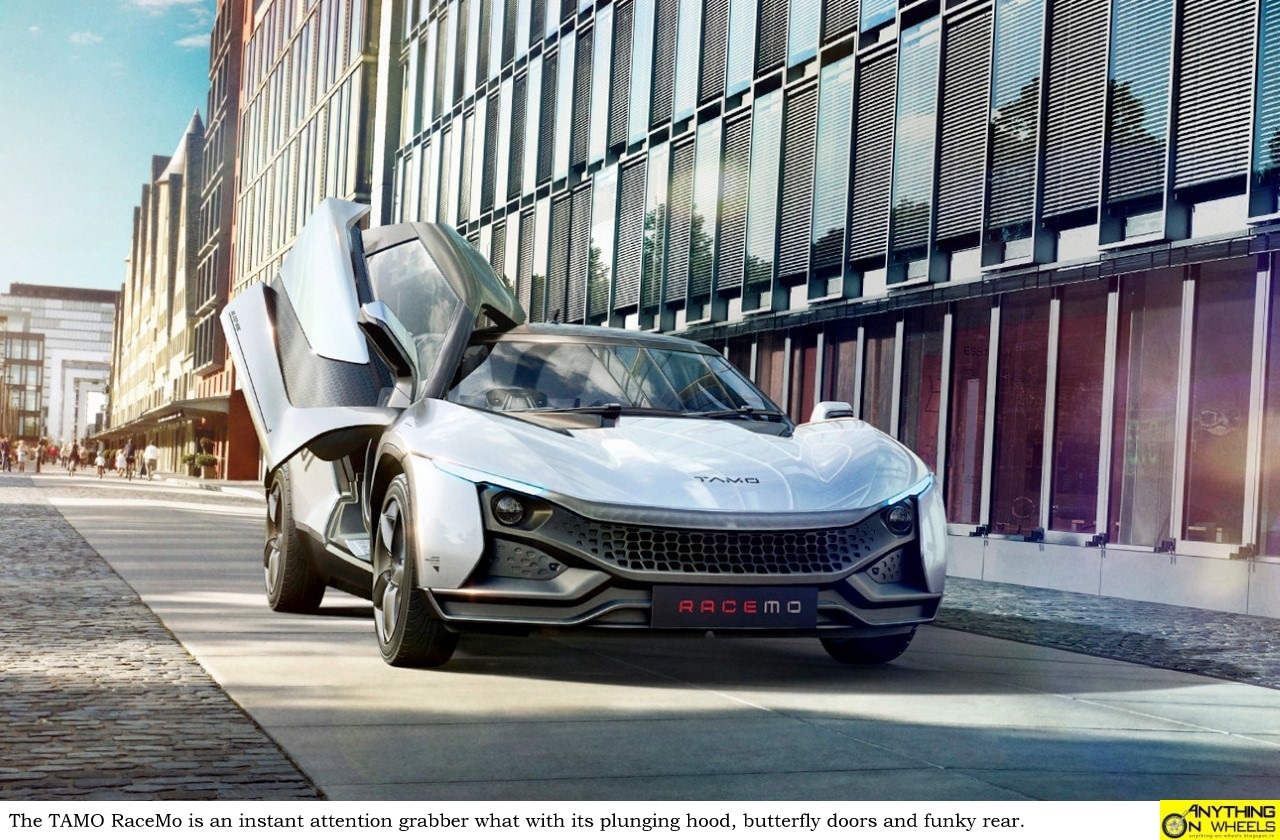
2017 Geneva - Tata shines with the TAMO RaceMo

Tata Motors have been doing a lot of things right recently. The Tiago and Hexa have impressed the critics and the customers while the upcoming Tigor and Nexon have struck all the right chords so far. While we do not know if this can be considered in the same breath yet, there is no denying the fact they are trying something different. In case you are wondering, we are referring to the new sub-brand introduced by Tata Motors - TAMO.

In short for ‘T’ata ‘A’dvanced ‘MO’bility, TAMO is part of Tata’s “FutuReady” approach which will see the automaker partner with global startups and tech companies on future technologies, mobility systems, connected car programs and the likes. In short, TAMO is expected to bring Tata up to date with the prevailing global trends. As it works on a low volume, low investment model, TAMO would also help Tata present advanced concepts and off-beat offerings that wouldn’t have made a positive business case otherwise.


A series of well-timed teasers and a countdown running up to the 2017 Geneva Motor Show meant TAMO kept buzzing in the social media the past few weeks. With all that hype, the pressure was on Tata to ensure TAMO didn’t turn out to be a damp squib at Geneva. Boy, did they deliver!


Meet the TAMO RaceMo, India's first proper sports coupe. Yes, that's a two-seater mid-engined sports car from the brand that makes the Indica.


Powered by a tiny 1.2-liter 3-cylinder Revotron petrol engine, the RaceMo develops 187 horsepower at 6500 rpm and 210 Nm of torque at 2500 rpm. A 6-speed Automated Manual Transmission (AMT) with paddle shifters and push button reverse takes care of transmitting the power to the rear wheels. If the engine displacement and specifications aren’t impressive enough, the claimed 0-100 km/h acceleration time of under six seconds sure is.

The performance is backed up by styling elements that are sure to stand out in a crowd. The plunging hood, the butterfly doors, the unique bubble-shaped structures in the roof, the contrasting engine cover with air intakes, the floating rear wheel arches and fender panels and the high-mounted center exhaust make it an arguably busy design. So be it, we say. Tata needs every bit of attention the RaceMo might attract when seen on road and some more. Inset Bi-LED headlamps, thin LED DRL strips and circular LED taillights complete the look.


The interiors are flashy and futuristic with switches, a part of the center console and the fabric door pulls finished in a bright red colour. The flat-bottom steering wheel with a host of buttons and the three LCD screens that make up the instrument cluster look interesting and, of course, funky. This is where TAMO’s recent partnership with Microsoft will likely help, what with the various connected car tech the two firms would work together on. Don’t miss the ‘Take Selfie - Picture’ and ‘Record Selfie - Video’ options displayed in one of the screens.


Equipped with independent double wishbones all around, the RaceMo has a staggered wheel setup with 205/50 17-inchers up front and 235/45 18-inchers at the rear. In terms of safety, the car gets a driver airbag, passenger airbag, disc brakes on all four wheels and ABS with EBD. Ground clearance is an impressive 165 mm, more than what we get in some mainstream family sedans out there.

The RaceMo is built on a patented MOFlex Multi-Material Sandwich structure that, Tata claims, is being used for the first time ever in the automotive industry for passenger vehicles. With a modular design approach that enables large scale part integration, the RaceMo has lesser number of parts, lesser complexity and has a faster development cycle compared to a regular car.

That’s not all, there will also be a track-only version, the RaceMo+, with more vents, an adjustable front splitter, a massive rear wing and bright red accents. Inside, the RaceMo+ is equipped with racing seats, a different steering wheel without the airbag and a stripped out cabin.


250 units of these would be produced, with the first of them expected to go on sale as early as end 2017. With a rumored price tag of around 25 Lakh Rupees, we think TAMO should have no problems in selling the 250 copies of this image-booster of a product. 

For the rest of us, the RaceMo is available for download in the popular Forza Horizon 3 game from Microsoft.