20181221

2019 Indian Car of the Year announced

The annual award season has begun and kicking things off in style is the Indian Car of the Year (ICOTY) title. Modeled on the likes of similar titles handed out globally like the North American Car of the Year and the European Car of the Year, the ICOTY is considered the most definitive award in the Indian automotive industry. That's primarily because the award sees the coming together of automotive experts and journalists from almost every major publication and website in the country. Each of the jury members have been driving and reviewing automobiles for more than a decade each and the scoring process is claimed to be simple and transparent.

This year also sees the introduction of a new category under ICOTY called the Premium Car of the Year. Aimed at cars costing over INR 40 Lakhs ex-showroom, this award intends to recognize the best set of wheels for the super-rich Indians.

2019 Indian Car of the Year

2018 has been one of the busiest in recent years in terms of the number of new cars launched but the jury members spent a day driving all the new models at the Buddh International Circuit that allowed them to shortlist 8 cars for the final run-up to the title. The ones that made the cut are the Amaze and CR-V from Honda, the Hyundai Santro, the Alturas G4 and Marazzo from Mahindra, Maruti-Suzuki's Ertiga and Swift and the Toyota Yaris. As evident, each of these models are crucial launches not just for the respective brands but also for the segments in which they retail. 

In the end, it was Maruti-Suzuki's Swift that won the coveted award. Crowned last evening at a glitzy event in Mumbai, the Swift took home it's third ICOTY trophy having already won the title in 2006 and 2012. That makes the premium hatchback from Indian's largest car-maker the only car thus far to have won the award thrice. Offering a stylish, peppy and fun-to-drive package loaded to the gills with features and protected by the country's best after-sales network, the Swift is a "You can't go wrong" choice this side of 10 Lakh Rupees. It's no wonder then the sales are shooting through the roof with each passing month.


Though the other contenders provided strong competition initially, the Swift won by a significant margin of over 30 points in the end. Hyundai's Santro finished runner-up with the Honda Amaze rounding off the podium. 

2019 ICOTY Results

  1. Maruti-Suzuki Swift 
  2. Hyundai Santro
  3. Honda Amaze


Previous ICOTY Winners

  • 2018 - Hyundai Verna
  • 2017 - Maruti-Suzuki Vitara Brezza
  • 2016 - Hyundai Creta
  • 2015 - Hyundai i20
  • 2014 - Hyundai Grand i10


2019 ICOTY - Premium Car of the Year

Premium cars aren't always assembled or manufactured in India, given the limited sales and lack of volumes. That eliminates most of the premium cars from even competing for the ICOTY title. The Premium Car of the Year award, introduced this year, aims to set things right at the upper end by separating the luxury cars whose strengths and evaluation criteria are often different from mass-market cars.

The inaugural edition of the ICOTY Premium Car of the Year title had 11 contenders. The list included Audi's Q5 and RS5, the X3 and 6-Series GT from BMW, the Mercedes-Benz E 63 S, Mini Countryman, Porsche Cayenne, Range Rover Velar and the XC40 and XC60 from Volvo.

While the jury crowned the Volvo XC40 as the winner this year, it's bigger sibling - the XC60 - finished runner-up. 


That's quite a message from Sweden to the well-established luxury marques from Germany and the United Kingdom. It's going to be really interesting to see how things in the premium segment shape up in the coming years. 

20181202

2018 Los Angeles - Jeep Gladiator, the brand's first pick-up in 26 years, makes its debut

Americans love Jeeps. And they are obsessed with pick-up trucks. Ironically though, Jeep has not had a pick-up in it's portfolio for the last 26 years. Having missed out on ever-growing sales and ever-soaring profits from pick-ups for more than two decades, Jeep has decided they have had enough. In comes the Gladiator, making it's much-awaited global debut at the ongoing 2018 Los Angeles Auto Show. 


As soon as the officials at Jeep wanted to make a pick-up, it was clear that it would be based on the Wrangler. The spy-shots that came in later was more proof that the pick-up bearing the Jeep name is an extension - quite literally - of the Wrangler. Now that the curtains are off, that's exactly what the Gladiator is. And we're glad at that, given Wrangler's iconic looks, rich legacy and crazy fan-following. 


As Jeep proudly claims, the Gladiator is a modern take on authentic Jeep design cues that we have seen and grown in love with. Those familiar seven slats that form the grille, the circular headlights, that clam-shell hood with side opening levers, the foldable windshield, the detachable doors with external hinges, those massive wheel arches that protrude from the body, you name them and the Gladiator has them. What's new though is the bed aft of the rear doors. Like the facelifted Wrangler that made its debut earlier this year, the Gladiator also gets LED lighting signatures that look super cool.

Jeeps have always had the go to match their show and the Gladiator is no different. Armed with Command-Trac and Rock-Trac 4x4 systems, third-gen Dana 44 axles, Tru-Lock front- and rear-axle lockers, Trac-Lok limited-slip differential, a segment-exclusive electronic sway-bar disconnect and 33-inch off-road tires, the Gladiator can take you to places only a Jeep can. If you think all those off-roading credentials come at the expense of practicality, you're wrong. This Jeep pick-up has best-in-class towing and payload capacities amongst all mid-size trucks. Yes, it can tow upto 7,650 pounds and carry upto 1,600 pounds, more than what a Ford Ranger or a Chevrolet Colorado could.


Jeep is well aware of the fact that Gladiator customers are likely to buy it as a lifestyle choice rather than a workhorse truck. That explains why this truck comes with open-air motoring ability - sans windshield and doors - that's unique to the Jeep and a long list of official accessories for taking along your ATV, dirt bikes, skateboards and even speed boats. Mopar, Jeep's official customizing arm, is likely to have it's own list of goodies for the Gladiator right from launch too.

The cabin features an upright design and stance that's pretty much the same as that in the Wrangler. Unique metal-plated accents abound as do bolts on the shifter, grab handles and the infotainment screen's frame. Instrument cluster features a standard 3.5-inch screen or an optional 7.0-inch TFT LED screen that allows the driver to configure information in more than 100 ways. Depending on the variant, the UConnect infotainment system gets a 5.0-, 7.0- or a 8.4-inch touchscreen seated atop the center stack. Safety is taken care of as well with features like Blind-spot Monitoring, Rear Cross Path detection, Adaptive Cruise Control and Electronic Stability Control (ESC) with Electronic Roll Mitigation being part of the kit.


Powering the Gladiator is a 3.6-liter Pentastar V6 gasoline engine that churns out 285 horsepower and 352 Nm of torque and comes mated to either a 6-speed manual or an 8-speed automatic transmission. Come 2020, a 3.0-liter EcoDiesel V6 joins the lineup too generating 260 horsepower and 599 Nm of torque. The diesel is exclusively paired to the 8-speed automatic gearbox that's tuned to handle the massive torque rating of this engine. 

Production of the Jeep Gladiator would being in the first half of 2019 with the truck expected to go on sale shortly afterwards. With Jeep posting impressive gains on the sales charts and demand for pick-ups continuing unabated, the Gladiator is all set for a homerun in the United States of America. The mid-size pick-up truck slug fest just got a whole lot tougher!

2018 Los Angeles - Hyundai Palisade debuts as the brand's new flagship

The 2018 Los Angeles Auto Show that's currently on at the popular California city might be the last big automotive event of the year but it appears to be packing quite a punch with several high-profile global premieres. One such potential big-hitter is the Hyundai Palisade, the marque's newest flagship. With three rows of seats that could accommodate eight people and measuring close to five meters in length, this all-new mid-size SUV is Hyundai's biggest and most spacious model till date.


Yes, the Palisade is late to the party that has quite a few popular models like the Ford Explorer, Toyota Highlander and Honda Pilot. But, has it got what it takes to do the role of a flagship, attract footfalls and bring in profits? Hyundai certainly thinks so!

For starters, the Palisade looks bold and fresh. Featuring the brand's latest design language first seen on the Kona and later adopted by the Santa Fe, the Palisade features split light clusters up front on either side of the now-familiar 'Cascading Grille'. If distinct styling is what Hyundai's designers were after, that goal has been achieved, albeit in a bit "in-your-face" manner. Move over to the silhouette and the car's size makes its presence felt. While the long hood, the generous wheelbase and flared fenders look intimidating, the profile itself is generic save for the tasteful application of chrome over the window-line and the wraparound effect given by the D-pillars. The rear, in Hyundai's own words, recalls Cadillac's design language with vertical taillight elements accompanied by metallic garnishes.


Being the flagship of a brand comes with it's own set of benefits and the Palisade gets them in abundance too. The interiors, with quilted Nappa leather and smooth wood-grain finishes, are tastefully done with the Palisade aiming to impress the occupants with a sense of space and plushness unseen in a Hyundai thus far. The second row gets two captain's chairs or a bench for three depending on the seating configuration chosen. The dashboard, like in most cars these days, gets two screens - a 12.3-inch digital TFT cluster behind the steering wheel and a 10.25-inch widescreen display in the center console for audio and navigation display. 


Standard safety features include a class-exclusive Blind Spot Monitor that provides the driver with an easy-to-see body-side views whenever the turn signals are activated in addition to Forward Collision Assist with Pedestrian Detection, Blind Spot Collision Avoidance, Driver Attention Warning, Lane Following Assist, High Beam Assist, Smart Cruise Control with Stop and Go, Rear Cross-Traffic Collision Avoidance Assist, Safe Exit Assist that uses radar to detect cars approaching from the rear and warn occupants accordingly and seven Airbags. 

Creature comforts are in abundance too, keeping in mind the Palisade's target group of large families. Yes, the Palisade gets seven USB outlets, sixteen cup holders, option to connect two BlueTooth devices at once, a "Rear Sleep Mode" that adjusts the audio output to the front speakers alone to enable easier sleeping for those seated at the back and an intercom system that allows the front occupants to communicate independently to the second and third row or to both rows together. The parents seated at the front as well as the kids at the back are going to have fun in the Palisade, it seems!   
  

Under the long hood of the Palisade is a 3.8-liter V6 engine that works on the Atkinson Cycle for better fuel efficiency. Generating 291 horsepower at 6,000 rpm and 355 Nm of torque, the Palisade's power and torque figures are amongst the best in the segment. Mated to this engine is a 8-speed automatic transmission that delivers power to the two front wheels or all four wheels depending on the configuration chosen. The HTRAC all-wheel drive system comes with selectable driving modes that changes the torque distribution to the wheels at the touch of a button.


The Palisade goes on sale late 2019 as a 2020 model. Yes, that's a rather delayed entry given SUV sales are booming worldwide 'right now' and Hyundai needs something bigger than the Santa Fe 'right now'. But as they always say, it's better late than never.

20181023

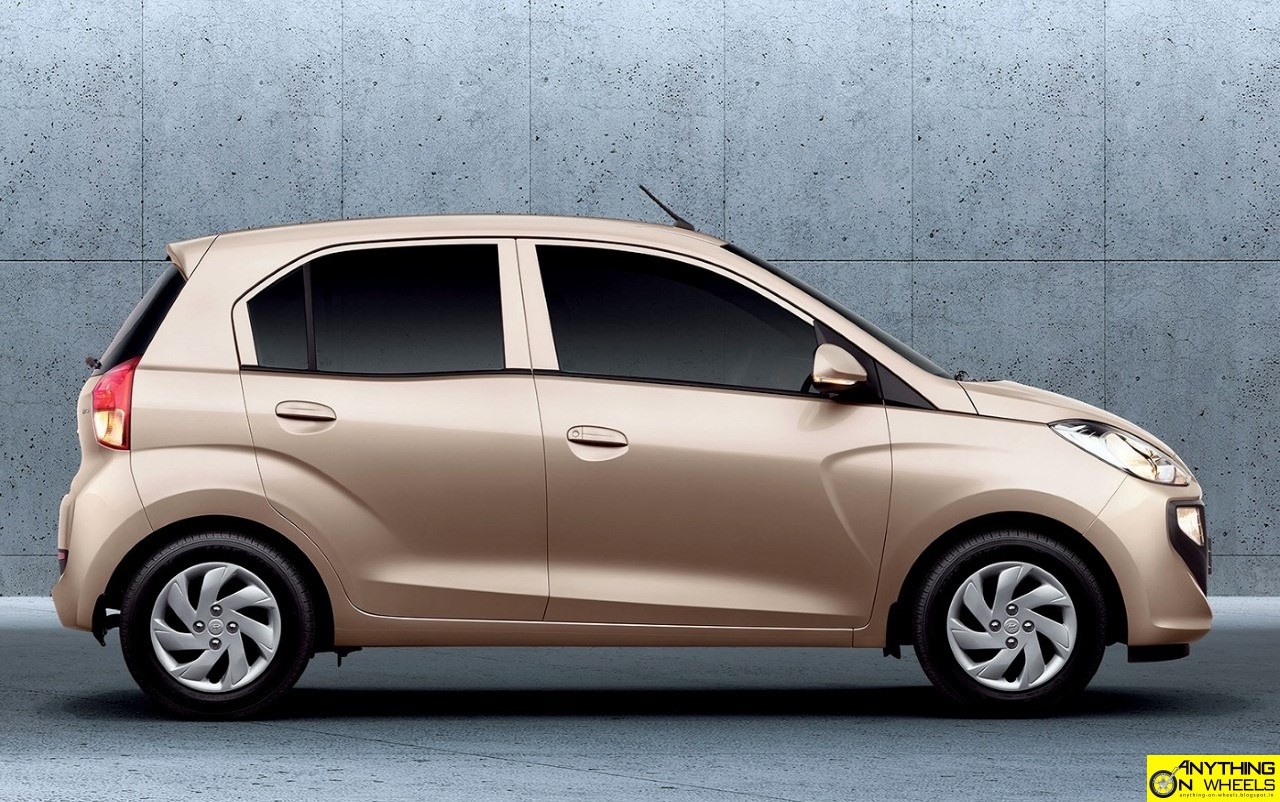
All-new Hyundai Santro launched between ₹3.89 - ₹5.64 Lakhs

When Hyundai unveiled the made-for-India Santro at the 1998 Auto Expo in New Delhi, not many expected the car to succeed in India. That’s not surprising, given Hyundai was pretty much an unknown entity and the car itself, with it’s odd-ball styling and weird tall-boy proportions, looked funny. Let’s also not forget that the Tata Indica and Daewoo Matiz made their debuts at the same event. But what happened when the car went on sale in September that year is history. The Santro took the market by storm, usurped hitherto-unchallenged market leader Maruti-Suzuki and laid the foundation stone for the success enjoyed by Hyundai in India till date. 


That explains why Hyundai went all out in building up hype around the all new Santro that’s making a comeback in India after a six year hiatus. Though the car was officially launched and prices were revealed today, India’s second largest car-maker had revealed the car and opened online bookings earlier this month. The response, as one would expect, has been great. The new Santro had garnered 23,500 bookings at the time of its launch, underlying the reach and popularity of the nameplate.

Slotting in below the Grand i10 in Hyundai's lineup, the Santro will eventually take the place of Eon as the brand's entry level hatchback in India. Available in five variants - D-Lite, Era, Magna, Sportz and Asta - the Santro is priced between ₹3.89 Lakhs and 5.45 Lakhs ex-showroom pan India. The Magna and Sportz variants are also available with a factory-fitted CNG option (₹5.18 - 5.46 Lakhs) and an Automated Manual Transmission (₹5.23 - 5.64 Lakhs) developed in-house. 

These prices put the Santro firmly between cars like the Maruti-Suzuki Celerio and Tata Tiago at the lower end and the Maruti-Suzuki Wagon-R, it's big rival for almost two decades now, at the higher end. Hyundai's new hatch is expected to pull customers from all of these cars as well as legacy customers who are still holding on to their old Santros for the space and practicality it offers in a compact footprint.


Santro has always split opinions when it comes to design and styling and the new model stays true to that tradition. When Hyundai released images of the new Santro two weeks ago, the first reactions were that the car is overstyled. That's particularly true when the Santro shows off its profile where the unusual kink in the window line and the busy character lines vie for attention. Out at the front, the Santro gets Hyundai's new Cascading Grille that now extends the full width of the car even encompassing the high-set fog lamps. A pair of swept-back headlights - not too dissimilar to the old i10 - complete the front end. The rear gets a sculpted tailgate and a two tone bumper with built-in reflectors. 

One area where the Santro knocks the competition out of the park is with it's interiors. The biege and black cabin is well designed, well equipped and appears nicely put together. Smart touches include propeller-shaped side air-conditioning vents, a trendy instrument cluster with standard tachometer and champagne gold inserts that syncs perfectly with the beige cabin plastics. An array of first-in-class features - rear air-conditioning vents, a 7-inch touchscreen infotainment system equipped with Android Auto, Apple CarPlay, Mirror Link and Voice Recognition and rear parking camera with display in the touch screen - make their debut in the Santro. 

While Antilock Braking System with Electronic Brakeforce Distribution and driver airbag are standard across the range, only the top-end Asta gets a passenger airbag. This is disappointing given the increasing levels of awareness and focus on safety. What's more annoying is Hyundai's stubbornness in not giving the buyers an option of a top-end automatic model. You can't get a Santro with a passenger airbag and an AMT!


Powering the Santro is Hyundai's tried and tested 1.1-liter engine that produces 68 horsepower at 5,500 rpm and 99 Nm of torque at 4,500 rpm. In a segment where rivals use 3-cylinder engines, Santro's smooth and refined 4-cylinder mill will be an advantage. The engine comes mated to a 5-speed manual transmission or an Automated Manual Transmission dubbed 'Smart Auto'. Both the variants come with an ARAI-certified fuel efficiency of 20.3 km/l. If you opt for one of the two CNG variants, the power and torque figures drop to 58 hp and 84 Nm respectively.

The Santro is built on Hyundai's newer, bigger and stronger K1 platform that uses Advanced High Strength Steel at critical places on the body.

With over 1.86 million units sold in India and abroad during its first stint, the Santro has a huge customer base to build upon. And with the new Santro already off to a great start, things are looking brighter than ever for that number to swell considerably in the car's second stint in India. Let's watch this space!

20181019

BMW X7 breaks cover, to go on sale early 2019


Given the pace at which the German luxury trio - Audi, BMW and Mercedes-Benz - have been filling niches after niches in the automotive industry, it was quite a miss from the folks at BMW who had nothing in their range to go against Audi's Q7 and Mercedes' GLS. These two, together with Lexus' LX, Volvo's XC90 and Infiniti's QX80, have not just been popular but also very profitable for the respective car-makers. Making a belated entrance then is the all-new X7, BMW's first-ever full-size crossover SUV with three rows of seats. 


Have one good look at the X7 and we bet you'll end up being intimidated. Firstly, the X7 is huge, coming in a whole lot bigger than the X5 and measuring almost the same length as the 7-Series. BMW's flagship sedan is soundly beaten in terms of width and height as well. Secondly, the trademark 'kidneys' up front have grown in size and are massive. Their sizes are further accentuated by thin headlights on either sides. Viewed together, the X7 looks trendy and menacing at once. The profile is conservative featuring a strong shoulder line and a flat window line that appears to have clearly placed function over form. The rear gets slender taillights that are connected by a thick chrome bar and a chiseled tailgate. Chrome embellishments are used extensively with the shiny metal occupying prominent spots all around the vehicle. 


For those that want their rides to look sporty, there's the 'M Sport' package that offers bigger (and, of course, sexier) wheels, upgraded exhaust system and brakes, bumper bars, side skirts and body panels that are devoid of chrome. Some interior bits have changed too in line with the sporty theme this package is supposed to convey.    

In it's standard configuration, the X7 seats seven but if specced with the optional captain's chairs on the second row that comes complete with all the adjustments and settings that the driver and front passenger get, the vehicle seats six. Hardcore BMW fans no longer have to contend with the optional third row in the X5 to accommodate their near and dear.


The interiors, as such, are plush, classy and inviting. Though the design and layout are not very dissimilar to the X5 and other recent BMWs, the X7's cabin exudes a sense of richness unrivaled by the other cars from Bavaria. Two large screens - a digital cluster and an infotainment screen - occupy prime spots in the dashboard while the center stack that's angled towards the driver houses two single rows of neatly-stacked buttons and knobs to control the audio and air-conditioning. The two-tone cream and blue upholstery with those nice and glossy pale brown wooden trims interspersed look fabulous. A three-panel panoramic glass roof is standard as are a ton of creature comforts and safety assists.

High-end equipment on offer include five-zone automatic climate control, Ambient Air package, Bowers and Wilkins Diamond Surround sound system with 20 speakers, soft-close doors, heated armrests, heated and cooled cup holders, gesture control, Siri-like 'Voice Recognition' system that responds to "Hey BMW" command, Rear-seat entertainment and a sunroof with optional embedded LED lights to give that starry sky effect (like a Rolls-Royce, no less!). The list just goes on and on. 


Top notch safety kit on board include Active Cruise Control with Stop & Go function, Driving Assistant Professional with Steering and Lane Control Assistant, Lane Change Warning and Lane Departure Warning, Lane Keeping Assistant and Side Collision Protection, Evasion Aid, Crossing traffic warning, Priority warning and Wrong-way warning, latest generation of the BMW Head-Up Display, Emergency Stop Assistant and Parking Assistant. 

Powering the X7 are a pair of gasoline engines - a turbocharged 3.0-liter, 6-cylinder engine producing 335 horsepower and 447 Nm of torque and a 4.4-liter, twin-turbo V8 that generates 456 horsepower and 649 Nm of torque. In the few markets where diesel cars are still in demand, BMW offers the option of either a turbocharged 3.0-liter mill that produces 256 horsepower or a quad-turbocharged unit good enough for 400 horsepower. Irrespective of the engine powering the vehicle, transmission duties are handled by a ZF-sourced 8-speed automatic gearbox that transmits power to all four wheels. 

All X7s feature a fully-independent suspension with dual wishbones at the front, a five-link setup at the rear and air springs that can raise and lower the ride height as required. Optional off-road package enables selection of xSand, xGravel, xRocks and xSnow driving modes at the touch of a button.

The X7 goes on sale early 2019 and when it does, expect this mammoth BMW to pose an equally mammoth challenge to the segment best-sellers. It's game on, then!