20131122

Ashok Leyland Jan Bus spotted testing in Chennai again

It seems Ashok Leyland, the Chennai-based commercial vehicle manufacturer, is having its hands full at the moment. While the Dost mini-truck and the Stile MPV are helping the company gain foothold in the Light Commercial Vehicle (LCV) segment at one end, the continuing sales slump in the Heavy Commercial Vehicle (HCV) space is a major cause of concern in the other end. The collective onslaught of international brands that include Volvo, Mercedes-Benz, MAN, Navistar and Scania has resulted in significant loss of market-share for the domestic brands, with Ashok-Leyland being the most-affected.

The Jan Bus, that we spotted testing in Chennai earlier this year, is one of the many products that Ashok Leyland has lined up to bring it back in the reckoning. While we were expecting it to go on sale any moment, it seems Ashok Leyland is on to something else as one of our regular readers spotted the Jan Bus being tested again. These pictures were taken late last week in one of the arterial roads in Chennai.


Unveiled to the public at the 2012 Auto Expo, the Jan Bus is a single-step entry, low-floor, front-engined bus that is targeted at the city transport fleets. If the brochure released by the company is to be believed, a turbocharged, fuel-injected, 6-cylinder ‘H-Series’ engine that generates 235 HP of power at 2400 rpm and 720 Nm of torque between 1600 to 1800 rpm would be powering the rear wheels of the bus. Features such as air-conditioning, Ashok Leyland’s proprietary ‘Leymatic’ Automated Manual Transmission, air suspension and a clutter-free gangway with cantilever-mounted seats and seat-mounted stanchions are expected to be available as and when the Jan Bus goes on sale on Indian metros.


Despite offering features similar to the city buses from Volvo and Mercedes-Benz, Ashok Leyland’s frugal engineering would mean that the Jan Bus would end up with a significantly lower sticker price, making it an excellent value-for-money proposition.

While all the above information is either known or being speculated, what’s a big unknown is the launch date of this sleek bus. We hope its not too far off. More importantly, we wish Ashok Leyland actually markets and sells the Jan Bus well as it shows huge potential to make a mark in our cities.

20131121

2013 Tokyo - Honda Vezel compact crossover makes its world debut

Crossovers and Utility Vehicles in all shapes and sizes are taking over the world big time. More specifically, the smaller, lighter and nimble compact crossovers are experiencing hitherto unseen levels of growth. With the all-new Vezel that made its global debut at the ongoing 2013 Tokyo Motor Show, Honda is the latest manufacturer to join this brigade.


Despite its looks suggesting otherwise, the Vezel, based on a platform that also underpins the new Jazz and City, is more a crossover than SUV. Sporting the brand’s new family design, the Vezel is sleek and modern, borrowing cues from other Honda models like Jazz, City and CR-V. In what could be termed as borderline fussy, the front end looks a bit cluttered with the three-part grille, the angular headlights and the bumper ridges vying for attention. With the arching windows and hidden rear door handles, the Vezel is designed to look like a coupe when viewed in profile. The strong character lines extend to the rear and, together with the sharp taillight clusters, make for an attractive rear three-quarter look.


The interiors are clean, modern and attractive with the center console’s clutter-free fittings looking classy and promising to impress in flesh. Hondas are always known for their good fit and finish and the Vezel wouldn’t be an exception. The power-train options are again shared with the Jazz and City, with a 1.5-liter i-VTEC petrol and a 1.5-liter i-DTEC diesel engine doing duty under the hood. While Japan will also have automatic transmission and Hybrid variants on offer, Honda’s intentions for the other markets aren’t clear at the moment.

With demand for compact SUVs booming in India, the Vezel should be a ‘de facto’ addition to Honda’s Indian lineup. But you never know, as the second-generation Jazz flopped spectacularly and its fortunes couldn’t be revived despite a massive price drop, leaving a bad taste with the top bosses at Honda. As and when Honda decides to bring this compact crossover here, we wish they also have the insight to change its name to something better and sweeter than Vezel.

20131118

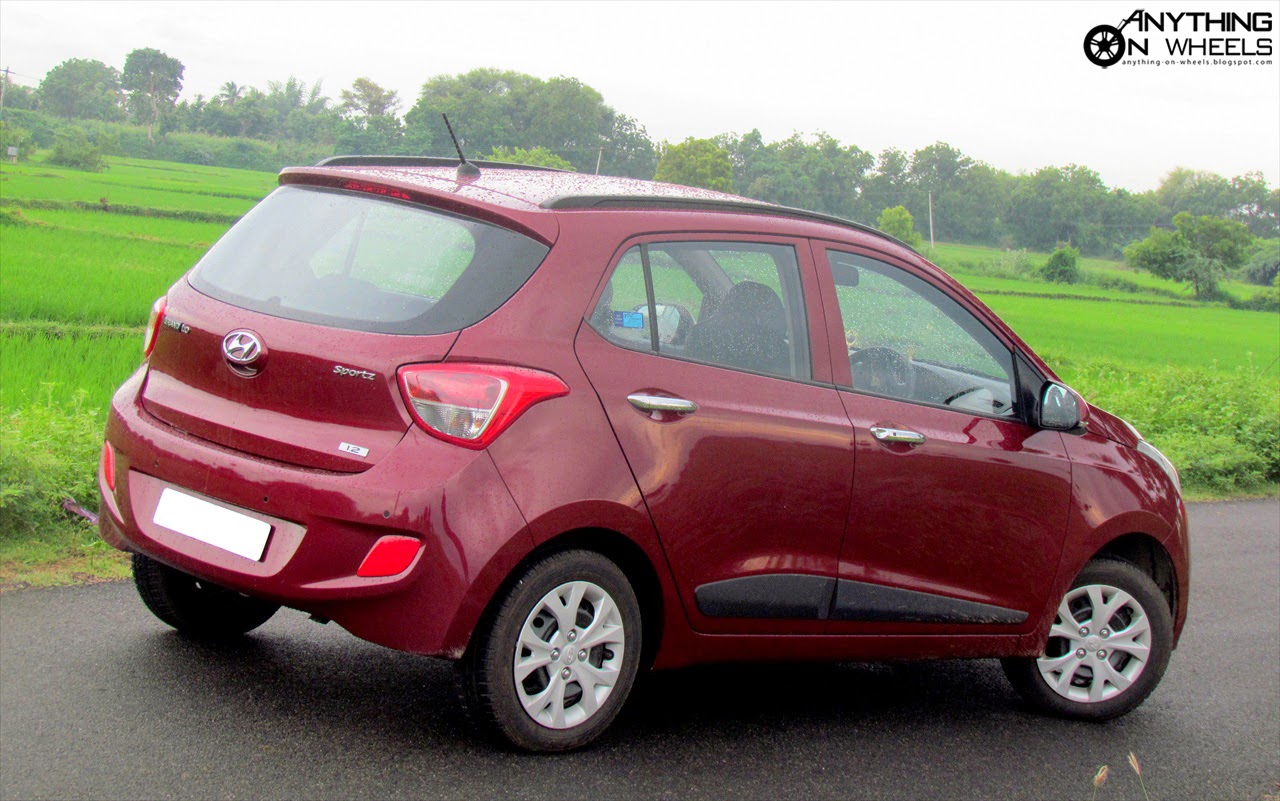
Driven #23: 2013 Hyundai Grand i10 Petrol

The i10 has been a stellar performer for Hyundai Motor India Limited. It not only received critical acclaim by winning every single “Car of the Year” title on debut but also went on to become one of the largest selling cars in our country. If our calculations are right, it is also, by far, the largest single nameplate exported from India, thus establishing the company's Indian facility as a trusty export base for small cars. Launched in 2007, the i10 immediately established itself as the segment benchmark for refinement and build quality. The only chink in its armor was the absence of a diesel engine option.


Now in its second generation, the i10 gets a ‘Grand’ prefix, has grown up a bit, is positioned a sub-segment higher and, most importantly, comes with the option of a diesel engine under the hood. With this repositioning, the Grand i10 is also now a direct competitor to the Swift that's ruling the sales charts month on month. Has the Grand i10 got what it takes to usurp the leader? We took the petrol-powered Sportz variant out for a quick spin to find out.

TO LOOK AT:

It seems the designers at Hyundai’s Russelsheim center in Germany set out on imparting the ‘fluidic sculpture’ a crash course on simplicity. The curves are straightened and the flamboyance reduced. As a result, the Grand i10 looks way less dramatic compared to the blitzkrieg created by models like the Verna, Sonata and Elantra when launched.


But that doesn’t mean the car isn’t a looker. With those stretched headlights and the single slat grille with a hexagonal air intake below, the front end of the Grand i10 is a replica of other Hyundai models, albeit with subtle changes. The foglamp enclosures, for instance, are shaped rather nicely while the bumper is aggressive with spoiler-like creases at both edges. Despite the chrome door handles, roof rails and thick rub-strips above the rocker panel trying their best to spice things up, the profile isn’t that catchy. Blame it on the ‘unique-for-India’ modifications that Hyundai did to suit our ‘desi’ requirements. The international i10 looks much sleeker with steeply-raked windows and a wraparound rear windscreen. But, its the Grand i10’s rear that left us thoroughly impressed. The chic taillamps, the neat roof spoiler and the sculpted bumper with integrated reflectors give the car an attractive European flair that’s hard to miss. The large Hyundai logo in the center conceals the tailgate opener, like in the i20.


Attention to detail is remarkable, be it in the thin metallic inserts in the taillight clusters, the sleek repeater lamps in the rear view mirrors or the neat little badges in the boot-lid. Unlike some competitors, usage of chrome is limited which helps in increasing the overall appeal.


If you have been looking for those stunning diamond-cut alloy wheels that created a flutter in the press advertisements, do note that they are available as an option only in the Asta variant. Despite being the top but one trim level, the Sportz variant misses out on those wheels as well as on certain essential features such as rear defogger, washer and wiper.

With the Swift showing no signs of slowing down and competition from the Polo, Brio and Etios Liva heating up of late, the success of Grand i10 is extremely important for Hyundai to maintain its market share in the high-volume small car segment. And the Grand i10, with its ‘please all, offend none’ philosophy looks potent to rule the segment.

TO SIT IN:

The first thing that strikes as soon as we step into the Grand i10 is the quality of interiors and the overall fit and finish. While the interiors of the old i10 was already amongst the best in segment, the Grand i10 takes it a few notches higher. In fact, this hatchback is so good that it could put some cars from two segments above to shame.


The two-tone dashboard has a mix of black and beige panels. Smartly, the portions that frequently come into contact with the occupants like the top of the dashboard, the area around the buttons in the center console and the door pads are finished in black. The rest of the interiors are logically laid out in a retro theme with none of the flashiness that we saw in other recent Hyundai models. Again, attention to detail is fantastic, as evident from the knurled finish in the buttons and the brushed silver finish that has been splashed tastefully across the cabin. We didn't quite like the circular shape of the air-conditioning vents that, despite giving a retro feel, lacks flair.

While the India-specific changes did reduce the style quotient of the Grand i10, they come across as the car's biggest asset inside. The rear seat is as spacious, if not more, than some sedans and the rear air-conditioning vents cool the cabin in a jiffy. Yeah, the quality of those vents and the pillar in which they are mounted isn't great, but who cares as long as it works perfectly? The rear bench is comfortable enough for three average-sized adults but the under-thigh support is just about adequate. The front seats do a much better job in terms of bolstering the passengers.


Like all Hyundai models, the Grand i10 boasts a long list of standard features that include rear parking sensors, keyless entry with button start, music system with 1 GB of inbuilt memory and even a cooled glove-box. What's not standard though are ABS and Airbags. Worse still, they aren't even available as an option in any variant except the top-end Asta. As much as Hyundai, we Indians are also to blame for showing manufacturers time and again that we prefer fancy features over safety. We wish the time comes when safety becomes a priority and not an option.

ON THE ROAD:

The big excitement surrounding the Grand i10 is the availability of a diesel engine for the first time. Despite testing the petrol Sportz variant, we did manage to eke out a real-quick drive in the Grand i10 CRDi. Powered by the 1.1-liter, 3-cylinder U2 engine, the car pumps out a modest 71 ps of power and 16.3 kgm of torque between 1500 to 2750 rpm. While we walked away impressed with its refinement and torquey low and mid-range, we weren't able to stretch its legs and verify the response at higher revs.


Coming back to our petrol-powered test car, it is the same 1.2-liter, 4-cylinder Kappa-2 engine that we have driven and experienced extensively in the i10 and i20 before. With 83 ps of maximum power and 11.6 kgm of peak torque, the Kappa-2 motor is a refined and powerful mill that lets the Grand i10 post impressive acceleration figures for a small car. The power delivery is linear and the car never keeps you wanting. Keep the engine revving between 1500 to 3500 rpm and the Grand i10 goes about its job fuss-free. Together with the butter-smooth gearshift that slots neatly and authoritatively into place, driving the Grand i10 is a pleasure. For sure, this Hyundai has got to be one of the best city cars available in the Indian market today.

To make your city drives even more easier and stress-free, Hyundai has launched the Grand i10 with a 4-speed automatic transmission last week. Looking at the number of i10 automatics running on our metros, We are sure that the Grand i10 Automatic is going to be extremely popular.


This being a short drive, we weren't able to stretch the Grand i10 out on a highway. But on the few pedal-to-the-floor stretches that we did encounter, the car showed adequate eagerness to gain momentum. It is only after 4000 rpm that the engine starts showing signs of strain.

Ride quality is better than many cars in the segment and the Grand i10 absorbs bumps and potholes without letting then into the cabin. Stability at triple digit speeds is good too and the Grand i10 handles much better than the i10 and i20. Steering feedback, Hyundai's bugbear for quite some time now, is good and is second only to the Elantra in the company's lineup. Having said that, it still has a long way to go to match segment stalwarts like the Fiat Grande Punto and Ford Figo. The brakes are responsive though and the Grand i10 sheds speed without much drama.


SPECIFICATIONS:


| Engine Type: Kappa-2, VTVT, DOHC |
| No of Cylinders: 4 |
| Displacement: 1199 cc |
| Maximum Power: 83 ps @ 6000 rpm |
| Maximum Torque: 11.6 kgm @ 4000 rpm |
| Transmission Type: 5-speed Manual |
| Tires: 165/65 R14 |
| Brakes: Disc (Front & Rear) |


WE VOTE FOR:

* Clean styling
* Interior quality, fit and finish
* Long list of standard features

WE VOTE AGAINST:

* Average handling
* Restricted safety features

VERDICT:


The Grand i10 is one of those cars that we could hardly find fault with. It looks good inside and out, is feature-loaded, boasts excellent fit and finish, provides the buyers with the option of a peppy petrol and a frugal diesel engine with the former also available with an automatic transmission, rides well and comes with Hyundai's reputed after-sales service backup. In front of these positive traits, the car's shortcomings in steering feedback and lack of safety features in mid variants are completely overshadowed.

With no major deal-breakers, the Grand i10 has 'blockbuster' written all over it. Book one now before the crowd realizes this and storms Hyundai dealerships.

20131114

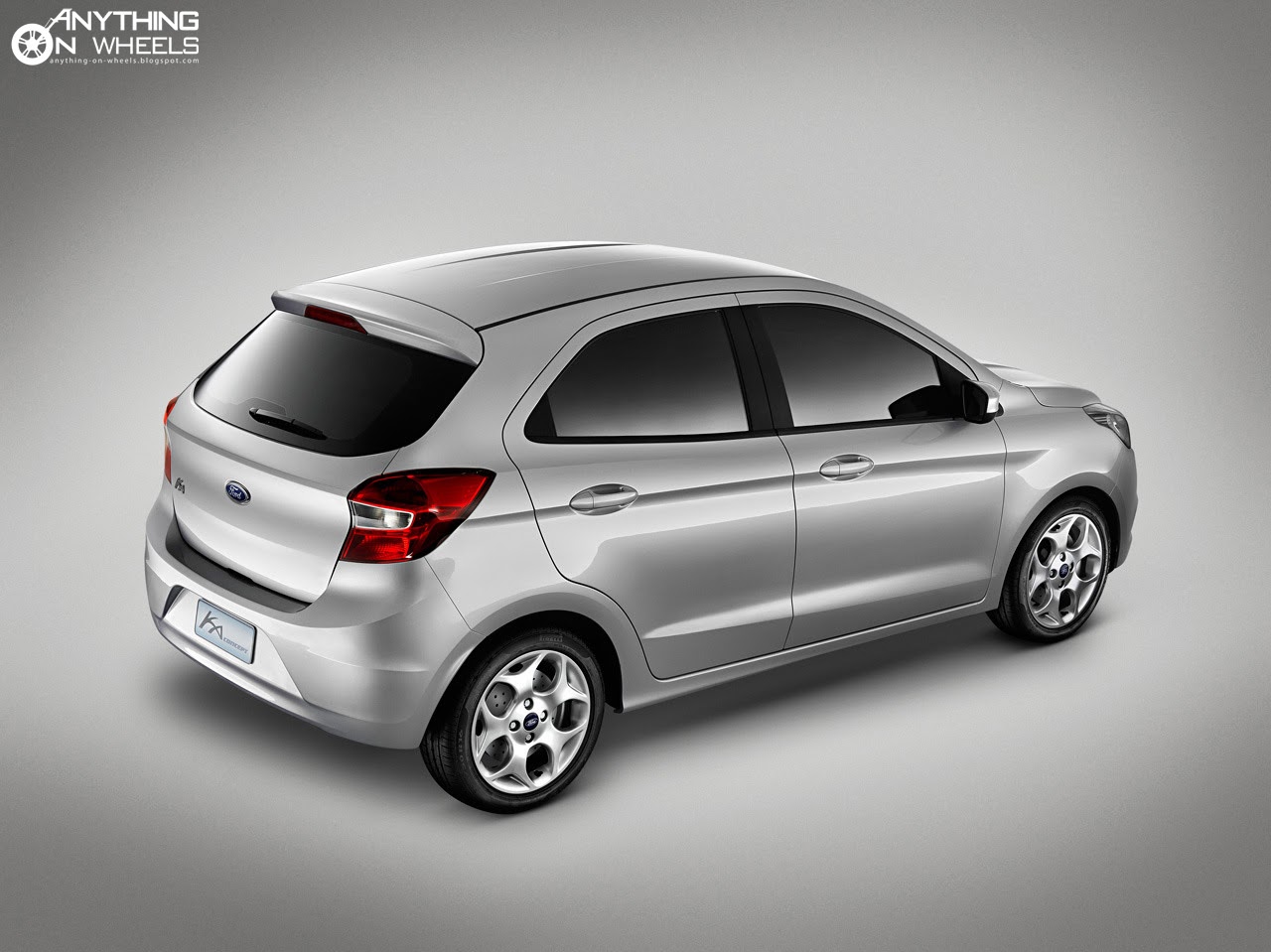
Ford unveils Ka Concept, previews next generation global small car

Ford Motor Company recently unveiled what could eventually turn out to be its most important model in the emerging markets. The new Ka Concept, conceived and developed in Brazil, previews the next generation global small car from Ford. With the compact segment expected to grow significantly over the next few years, this new model will help Ford boost volumes not only in established markets like Europe but also in emerging markets like Brazil, India and South Africa to name a few. Staying true to the ‘One Ford’ policy that has yielded success in all the new Ford models over the last half decade or so, the new Ka would be a global offering that will end up competing with models from Volkswagen, Hyundai, Kia and Suzuki depending on the market in which it retails.


Despite being dubbed a concept, there is nothing conceptual in the new Ka. Yeah, those detailing in the headlights might not make it to production, but the rest of the car is pretty much production-ready. Sporting the latest iteration of Ford’s ‘Kinetic Design’ philosophy, the Ka Concept comes across as sharp, crisp and muscular. The large trapezoidal radiator grille up front, that looks not too dissimilar to the one found on Aston Martins, is a stand-out design touch. Sweeping character lines abound the bumpers, the hood, the doors and the boot. The large taillight clusters are a bit of a downer though as it makes the car look a bit bland.

Expected to go on sale late next year, the new Ka will also replace Figo in markets like India and South Africa where the Figo has been a big success story for Ford. Expect the ‘Figo’ moniker to stay in these markets, as the car has earned quite a reputation for its superb handling and value-for-money pricing that Ford would want to capitalize.


Speaking on the unveiling, Joe Hinrichs, President of The Americas for Ford Motor Company, said, “The Ford Ka Concept is aimed at customers in growth markets who want and expect more. It will delight consumers with its sleek design, clever technology, attention-to-detail quality and superb craftsmanship. It also shows the continued importance of our South American design and engineering capabilities to serve markets around the world. It’s truly another global design and engineering milestone for Ford.”

Like the Ecosport did on the eve of the 2012 Auto Expo in New Delhi, we expect the Ka Concept to steal the limelight and woo us Indians in the upcoming 2014 edition.

20131105

Harley Davidson unveils the all-new 'Street' series


Harley-Davidson, the much-revered American manufacturer known for its big, mean and flashy motorcycles, unveiled the all-new ‘Street’ series today at the ongoing EICMA motorcycle show in Milan, Italy. After ruling the roost with its high-end cruisers, this is the company's attempt to capture the urban motorcycle market that's showing high growth prospects in both the developed and emerging economies. Slated to go on sale in 2014 in 500 and 750 guises, the Street is designed to inspire and attract young riders around the world, thus opening the doors for an entirely new set of customers to experience the brand.

Built on the first all-new platform developed by Harley-Davidson in 13 years, the Street series is said to be built for urban environments with younger styling, new liquid-cooled ‘Revolution X’ V-Twin engines and nimble handling while not compromising on the virtues that have made Harleys popular the world over.


“Both the Street 750 and Street 500 were designed with thousands of hours of input from young adults in cities around the world. This input guided both the attitude and capabilities of these motorcycles. They are proof that being customer-led continues to be a core driver of our product development process,” said Matt Levatich, President and Chief Operating Officer, Harley-Davidson Motor Company.

As a result, the Street looks much sleeker than the traditional Harleys which is sure to lure the younger demographic. While the teardrop fuel tank, the long '2 into 1' exhaust and the small bullet-shaped indicators are likely to grab eyeballs, we aren't sure about the retro circular headlight and bikini fairing. They look way too simple to be found on a motorcycle in this segment. Harley-Davidson’s trademark ‘Dark Custom’ theme has been employed which means there is more of matte black and less of chrome.


Both the Street 500 and 750 will be powered by V-Twin engines with 4 valves per head and the cylinders angled at 60°. Mated to a 6-speed transmission, these motorcycles are belt-driven. A very low seat height, tuned suspension, a chassis that aids maneuverability and improved agility are expected to make the Street the most urban-centric motorcycle of the full Harley-Davidson lineup.

Expect the Street series to set the streets on fire as soon as they go on sale next year. And yeah, India would be getting these motorcycles too. Start saving folks, here is a genuine chance for you to own a brand-new Harley that you have been craving for!