20190321

2019 Geneva - Tata Motors shines with an array of new models

The 2019 Geneva Motor Show closed curtains last week. As always, flying the Indian flag proudly there was Tata Motors with no less than four world debuts. Before you brush them off thinking them as just a bunch of new outworldy concepts that might never hit production, let us tell you two of those are launching right here in India this year. Yes, that's true. With the recently-launched Harrier also joining the party, Tatas sure had a good outing.

Altroz

When Tata Motors unveiled the 45X Concept at the 2018 Auto Expo in New Delhi, we heard there was not one onlooker that wasn't stunned with what they saw. This then, ladies and gentlemen, is the production version of the very same car. Of course, the car is now much toned down and there are certain elements that would take time to grow on us. Crucially, the Altroz would plug a gaping hole in Tata's domestic portfolio that lacks a premium hatchback to rival the Maruti-Suzuki Baleno, Hyundai i20 and the likes.


The first in a series of new models to be built on Tata's ALFA platform, the Altroz features the car-maker's "Impact 2.0" design philosophy. Those of you familiar with that term would immediately recognize the smiling mesh grille that merges with the wraparound headlights and the split light clusters up front. The profile is trendy and features prominent cuts and creases. The piano black inserts along the steeply-rising windows and the boot-lid, while adding a touch of character, looks polarizing. That said, the Nexon did split opinions when it first debuted but looks funky and acceptable now. The Altroz might do the same a year down the line!


The interiors feature a mutli-layered dashboard with a freestanding touchscreen sitting atop the center console. Also visible is the part-digital instrument cluster and the chunky steering wheel, both of which could have been designed with a bit more flair. Being a Tata, expect the Altroz to offer abundant space for the occupants and their luggage. The Altroz is expected to be powered by two petrol and one diesel engines. The base variants might get the 1.2-liter Revotron petrol engine from the Tiago while the higher variants are expected to have the turbocharged mill from the Nexon in a lower state of tune. A 1.5-liter diesel is also on the cards, we hear.

With the Tiago, Nexon and the Harrier receiving thumbs up from the demanding Indian customers, the Altroz is treading the right path to success. We can't wait to drive one and see if the Baleno and i20 should be worried. 

Altroz EV


Also on display at Geneva was the full-electric version of the upcoming Altroz. While this car is not expected to launch in India anytime soon, what's clear is that Tata's new ALFA architecture is EV ready and this car might make it to production once the Indian market starts warming up to electric cars and charging infrastructure is established. In terms of looks, the Altroz EV features unique bumpers and wheels while the interiors also look a bit more upmarket with a Jaguar-style rotary gear selector.


While Tata did not release specifications of the car's electric motor, they did highlight the expected range of 250 - 300 kilometers and fast-charging capabilities of the Altroz EV with upto 80% charge reached in just an hour. How excited are you to see the Altroz EV making it to production?

Buzzard

One of the two premieres at the Tata stand that's launching shortly in India is the Buzzard. Before you dismiss the car for it's bizzare name, note that Tata would be rechristening the car before it launches here. And rumors are it could be called the Cassini. Sounds cool, no?


Viewed head-on, the Buzzard looks very familiar. That's because this is essentially the 7-seater version of the Harrier that was launched in India a few weeks back. To be priced and positioned as the brand's flagship, the Buzzard features the same "Impact 2.0" design language that's turning heads everywhere. At the front, the split headlight clusters and the smiling grille that fuses with the thin LED Daytime Running Lights give the Buzzard tons of character. The profile gets accentuated wheel arches and a powerful waistline for that big and butch look. Interesting elements include a raised window line for the third row and the roof rail bracket that drops down the sides like the original Tata Safari. Together with the rear roof spoiler and the sculpted tailgate, the Buzzard smartly manages to hide its bulk.


Based on the same OMEGA architecture that also underpins the Harrier, the Buzzard's cabin is also shared for the most part with it's smaller sibling. From the pictures released, the third row doesn't appear that spacious but we will reserve the judgement until we see and get into one in person. Under the hood of the Buzzard will be the same 2.0-liter Kryotec diesel engine in a possibly higher state of tune. Generating 170 horsepower compared to the Harrier's 140, the Buzzard will have a 6-speed manual or a Hyundai-sourced 6-speed automatic transmission options.

Slated for launch soon after the Altroz, the Buzzard will go head-to-head with arch-rival Mahindra's XUV5OO. Keep your fingers crossed!

H2X Concept

That brings us to the last - and possibly the most interesting - model on Tata's stands. Previewing a micro SUV codenamed 'Hornbill', the H2X Concept is likely to get into production within the next couple of years, we hear.

The "Impact 2.0" design language has worked wonders for Tata and the H2X Concept follows in the same footsteps. Be it the grille, the split lights with the striking tri-arrow pattern, the powerful surfacing or the flared wheel arches, the H2X Concept features elements that look very similar to the H5X Concept that previewed the Harrier. What makes the H2X Concept more attractive though is it's upright stance and boxy proportions that gives it a proper SUV look and feel. 


Being a concept, Tata has taken the liberty to play around with the colours and appointments in the cabin. Bright 'turquoise' highlights on the air-conditioning vents, seatback panels and center console, a steering shaped like an aircraft yoke and a single large screen with two 10.2-inch displays  and a massive glass roof look trendy but might not make it to production. 


To be built on the ALFA platform that the Altroz also uses, the H2X Concept is likely to lock horns with the Mahindra KUV1OO and upcoming micro SUVs from Maruti-Suzuki and Hyundai. 


If Tata manages to "deliver exemplary performance, future-ready connectivity and outstanding interior room" as their press release states with looks and proportions that aren't far off this concept, we are in for a treat. Come on Tata, bring this on!

Joining these models was the Harrier that made it's European premiere, badged the Buzzard Sport. As the post title says, Tata indeed shone bright in the Geneva spotlight!

20190315

Tesla unveils Model Y, the last of it's 'S3XY' quartet of models

After a lot of hype and fanfare that lasted for months, Tesla finally lifted the veil off the Model Y. This compact crossover completes the American car-maker’s cheeky and much-publicized ‘SEXY’ lineup. Oops, make that ‘S3XY’ although the intention was always to have the ‘E’ instead of ‘3’ until Ford Motor Company put paid to those plans. 

If you don’t know already, the Model Y is the crossover-equivalent of the blockbuster Model 3. The Y not just shares platform and mechanicals with the 3 but also a ton of the sedan’s styling bits.


Clean, minimalist and, to some eyes, a bit bland and boring too, the Model Y looks every bit a Tesla. Head-on, the triangular headlights and the droopy flattened sheet metal panel in place of the grille clearly establishes the Y’s link with the 3. The only giveaway - for keen observers - is the slightly higher ride height to pass off as a crossover. In profile, the roof rises and sweeps down in one smooth arc, giving this compact crossover a coupe-ish look that’s much in vogue these days. A truly panoramic glass roof that runs end-to-end, the stubby boot with an integrated spoiler and a pair of darkened taillights that extend into the boot lid completes the design. If you were expecting fancy ‘gull wing’ doors like the ones on Model X, it’s time to curb your expectations.


The interiors, just like the Model 3, has nothing but seats, a steering wheel and a huge 15-inch touchscreen right in the center of the dashboard. From windshield wipers to the infotainment system, from navigation to air-conditioning, Tesla lets you do anything and everything with this screen and only with it. That’s not good, yes, but that’s how it is and it’s been working well for them this way. Nevertheless, loads of tech including Tesla's famous 'Auto Pilot' will be on offer in the Model Y.


Interestingly, Tesla has designed the Model Y with a capability to seat up to seven passengers with an optional third row seat. With that sloping roof, the headroom is going to be real tight out there for those in the last row! 

Both the base rear-wheel-drive model and the dual-motor all-wheel-drive model come in two variants each. At $60,000, the most expensive of those will have a range of 280 miles and a top speed of 150 miles per hour. With a claimed 0 to 60 mph acceleration time of 3.5 seconds, it will reach there pretty quickly too. Click on the image below that lists crucial specifications for all the four variants.


Unlike the other three models that are built at the plant in Fremont, California, the Model Y will be manufactured at Tesla’s huge Gigafactory in Nevada. An upcoming plant in Shanghai will also build Model Ys to cater to the demand in China and other Far East markets.

Crossover coupes are all the rage right now and Tesla is smartly trying to cash in on the trend with the Model Y. Combine the trendy body-style with the incredible brand pull Tesla has, it’s not hard to imagine a swell order book and a long waiting list for the newest Tesla. Come on now, rush to Tesla's website with your deposits!

20190312

2019 Geneva - Pininfarina stuns with the Battista electric hypercar

When Pininfarina SpA, the legendary Italian design house that penned several iconic Ferrari cars over the years, decided to form it's own vehicle division under the ownership of Mahindra, not much was expected of them. While a series of teasers leading up to the 2019 Geneva Motor Show did raise hopes, not many still saw this coming. 

But, Automobili Pininfarina stunned the gathered audience when it lifted the curtains off the Battista. Named after the firm's founder Battista Pininfarina, the full electric hypercar is slated to go on sale in limited numbers starting 2020 when Pininfarina celebrates 90 years of existence.
 

The best part about the Battista is it's stunning design with just the right amount of aero elements all around. It has none of that busy look supercars these days seem to carry. Of course, the Battista doesn't have an internal combustion engine fed by a series of turbochargers to direct air to and from. But, that doesn't take away the fact this is yet another home run for the design house known for cars that stood the test of time like the Ferrari 275 GTB, Testarossa and F40.


The front end is characterized by a thin LED strip that runs the width of the car, connecting the headlights. The roof - along with the cabin that's located more to the front of the car - are shaped aerodynamically and features contrasting paint job. At the rear, distinct split tail fins with thin 'floating' taillight elements look striking with a carbon-fiber panel joining them to form a pop-up spoiler that aids downforce. This is a car that will turn heads wherever you go. Period!

Powering the Battista is a 120 kWh battery pack and four electric motors - one at each wheel - sourced from Rimac. Together, the powerpack delivers an astounding 1,900 horsepower and 2,300 Nm of torque. That's ridiculous, yes, but we aren't kidding!


Riding on 21-inch alloys shod with race-derived Pirelli P Zero tires, the Battista can zoom from 0 to 100 km/h in under 2 seconds. Top speed is claimed to be 350 km/h. For a car capable of such speeds, braking is of paramount importance. In the Battista, that's taken care of by specially-developed six-piston carbon-ceramic brakes from Brembo. 

Pininfarina claims a 450 km range on a full charge but expect that to drop drastically under full acceleration.


The cabin is driver-centric with two screens placed on either side of the steering wheel facing the person behind the wheel. While the one on the left controls the dynamics and performance, the screen on the right side controls media and navigation. There is another central screen right in between that keeps the driver updated with the vital stats on the go.

With a price tag expected to top USD 2 Million each and just 150 units planned, this car will be a rarity on the roads. And that's what makes the Pininfarina Battista all the more special, it's crazy power and torque outputs not withstanding!


Thank you Mahindra, the funds infused are being put to good use by your new Italian colleagues.

2019 Geneva - Alfa-Romeo Tonale Concept previews the brand's first compact crossover

At a time when it's main rivals from Germany and the UK are flooding the market with crossovers and SUVs to satisfy the exploding demands, Alfa-Romeo is waging a lone battle with the Stelvio. It's not hard to guess then the Italian luxury brand is struggling to grow and meet sales targets. 

But the scenario could change very soon. All the Italian car-maker has to do is to put the Tonale Concept you see in this post to production with minimal changes. 


Having debuted at the ongoing 2019 Geneva Motor Show, the Tonale - just like it's sibling, the Stelvio - is named after an Italian mountain pass. At 1,883 m elevation, the Tonale pass is not as high as the Stelvio pass, which indicates the Tonale's positioning in the Alfa-Romeo lineup.


Sporting attractive Italian design cues that Alfa-Romeo does to perfection so often, the Tonale Concept impresses at first sight. The fascia, with it's thin lights and the long vertical grille, is seemingly inspired by the Brera while the gorgeous 21-inch alloys decorating the wheels are an ode to the 33 Stradale. Things you would normally see on a concept - thin LED lights, exaggerated wheel arches, ultra-thin mirrors and flush-fitted door handles - are very much there. Remove them all and you'll realize this baby Alfa is a butch-looking crossover with spot-on proportions.


Inside, the Tonale Concept features back-lit panels, generous use of leather and Alcantara and a dashboard with a 12.3-inch display screen and a 10.25-inch touchscreen with a new version of Alfa's infotainment screen to keep the show-goers engrossed. Expect all of these to be toned down when the production model debuts.

Though Alfa-Romeo has been mum on the details, they have been generous enough to say the Tonale would have a hybrid powertrain under it's hood when it gets to production. Underpinnings are expected to be shared with the Jeep Renegade and the Jeep Compass with the Tonale likely to prioritize driving dynamics and luxury to meet the requirements of it's target clientele.

Whatever it is, we can't wait to see this in production. Even if it looks half as good as it does now, the folks at Alfa sure have a winner on their hands!

20190207

Driven - 2019 Hyundai Santro

Variant Driven: Sportz Auto


'Santro' is a name that needs no introduction in India. With 1.32 million out of the total 1.86 million units made finding customers across the country, this was the car that established Hyundai as a popular mainstream car-maker here. So, when Hyundai decided to bring the car back after a four year absence, you know the stakes are high. Does the new Santro meet the expectations? Will it satisfy the thousands of loyal owners waiting to upgrade to a newer and better model? Can it do what the Eon couldn't and take the fight to Maruti-Suzuki? In short, can the new Santro do what it's predecessor did all over again? 

We found out by spending a better part of the day on the top-end automatic variant.   

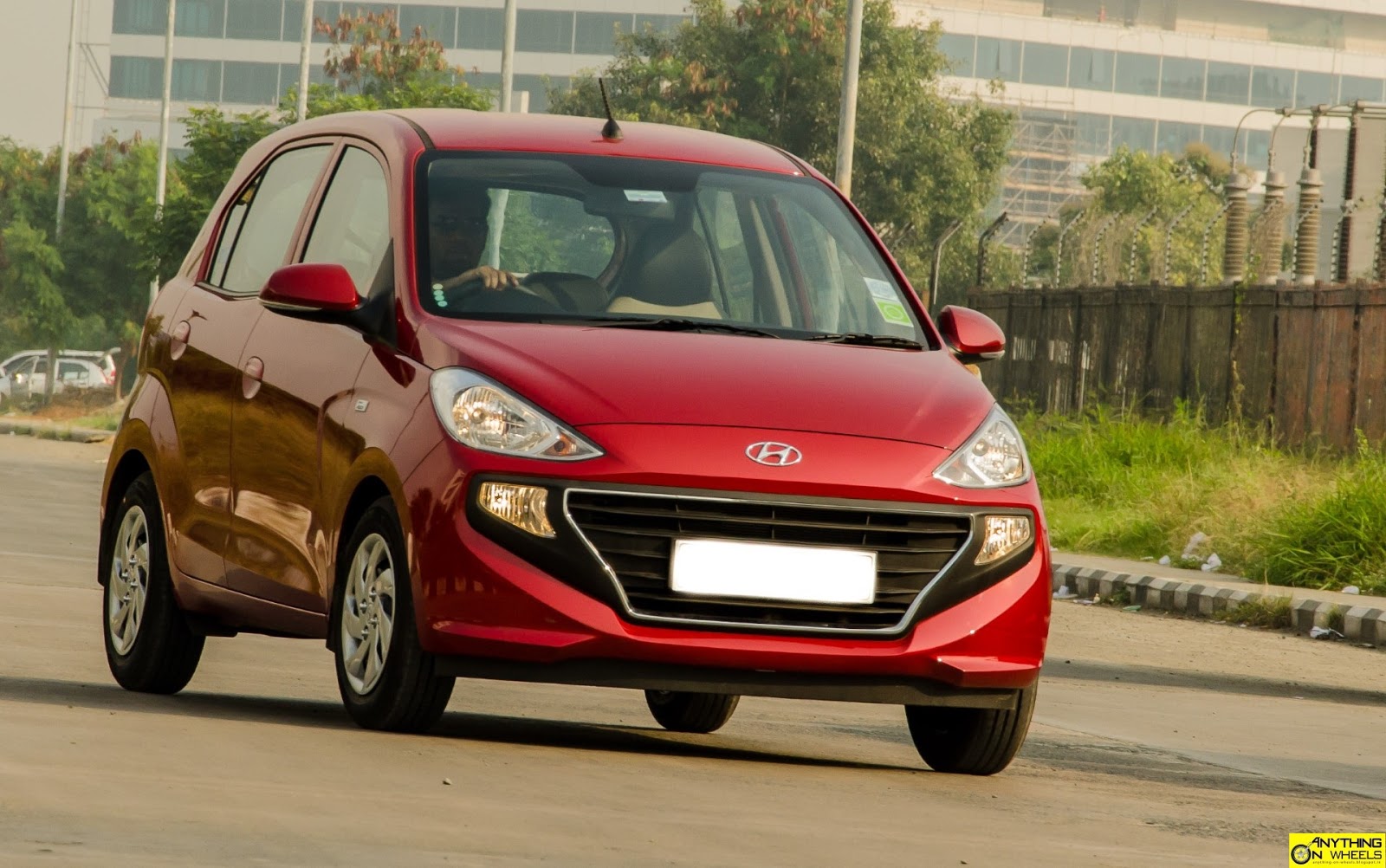
The Santro is still a quirky-looking car

The original Santro was actually derived from a car the South Koreans know as the Atos. Feedback from customer clinics in India where the car was showcased was apparently so bad Hyundai decided to give the car a nip and tuck along with a new name. Despite getting rid of the van-like rear end, the made-for-India Santro still wasn't a looker. It's bug-eyed headlights, toothy grille, tall-boy proportions and odd-ball derriere made it one quirky little car. 

The all-new Santro continues the tradition and is a fresh and modern take on the quirkiness it's predecessor made popular. 


Up front, high-set wraparound headlights that aren't disimilar to the old i10 give the new Santro a familiar look. A w-i-d-e grille - one that runs the full width of the car - is located right below and makes the car look broader than it actually is. Fog lamps and the registration plate are housed within the confines of the grille. Walk over to the sides and a pair of boomerang-shaped creases scream for attention. In what's a classic case of function being prioritized over form, the window line drops mid-way to make the interiors feel airy and less claustrophobic. Those who prefer clean profiles are likely to be put off with this busy design. At the rear, a pair of small trapezoidal taillights sit on either side of a sculpted hatch. The bumper gets a wide black insert that successfully breaks the monotony and adds a bit of flair.


Clearly, this is a love-it or hate-it design. While the design grew on me by the time I returned the car to it's owner, our photographer felt Hyundai could've done better. After all, the Grand i10 and i20 that share showroom space with the Santro look far more stylish and modern.

Interiors are a treat for the price

When you buy a Hyundai car, you sort of expect quality interiors with fit and finish that rival cars a segment or two higher. With the new Santro, the Korean car-maker has managed to deliver that, yet again. In fact, quality levels in the cabin are so impressive that the Celerio we used as a support car for the shoot felt downright cheap next to the Hyundai. Yes, there's cost cutting and we're getting to that a little later but whatever is in there is nicely put-together and likely to withstand abuse.


The moment you step in, you're bound to be impressed by the well-designed and neatly laid-out dashboard. Hyundai's designers seem to have taken inspiration from a host of places (and cars, obviously) to design this cabin. The two propeller-shaped air-conditioner vents are straight out of an A-Class while the brushed metal inserts on the steering wheel and around the gear lever and the central vents are painted 'Rose Gold' to rival the latest smartphones out there in the market. All the controls fall nicely on hand with the only major ergonomic flaw being the centrally-positioned power window switches. Be it the control stalks, the buttons on the steering wheel, the rotary knobs on the center console or even the re-circulation slider - every one of them is of decent quality and doesn't feel cheap. As always, Hyundai has raised the bar in this segment.


Thanks to the 'Tall Boy' design, the interiors are spacious and practical - two virtues that made the old Santro a smash hit in India. The front seats are soft and supportive and it's quite easy to get to a comfortable position. On the other hand, fixed steering wheel seriously limits the flexibility for the driver. The rear bench is easy to step in and out of and - by virtue of being wider than many of it's rivals - can accommodate three decently-sized adults easily. The seat isn't placed low like some other small cars, so there is decent under-thigh support too. While the floor is almost flat, the first-in-segment rear air-conditioner vents does intrude into the leg space of the fifth passenger. What spoils the show though are the absence of adjustable head restraints. Boot space is decent enough and should have no problems gobbling up a family's average weekend luggage.  

Instrument Cluster: 


As the saying goes, little things here and there make a big difference overall. Santro's instrument cluster fits that statement to the tee. It's a simple unit, yes, but it looks cool and, dare we say, racy. Two overlapping semicircles house a speedometer and a tachometer with an MID screen to the right displaying vital statistics. The irregular outline adds to the visual flair while classy white-on-black fonts are just perfect in terms of visibility.

Read-outs include two trip meters, instantaneous fuel efficiency, average fuel efficiency, distance to empty, engine run time and average speed. 

Infotainment System:


The Sportz and Asta trim levels get a 7.0-inch touchscreen infotainment system with four speakers as standard. Equipped with all sorts of connectivity options like BlueTooth, USB and Aux and capable of supporting Android Auto, Apple CarPlay and Mirror Link, this modern entertainment system is all that you'll ever need. Moreover, the system is intuitive, the display quality is good and there is no lag to the touch.

Apart from the usual entertainment and telephonic options, the touchscreen also serves as a display for the rear parking camera (exclusive to the Asta variant) and lets users customize a host of in-car settings too. While the audio quality is definitely superior to what's being offered by most of the Santro's rivals, we have a feeling the Harman-developed system in the Tiago sounds better. Whether we accept it or not, it's a fact that touchscreens are a source of distraction whilst driving. That's where Hyundai's thoughtful approach of providing physical knobs and buttons for frequently-used functions needs appreciation.    

It's built to a cost.. and that's evident

After all, the Santro is an entry-level hatchback that competes in a highly-competitive and cost-conscious segment where a few thousands make a big difference and affect purchasing decisions. Hyundai had to keep costs in check to have a stab at success in this highly-competitive segment. But, have they gone a bit too far in doing that?

When was the last time you saw a new car sporting outdated flap-type door handles? The Santro, unfortunately, has them. Except Asta, none of the variants get a rear defogger, washer or wiper. Alloy wheels have been given a miss, even on the Asta.


The spree continues inside too. The Santro doesn't get adjustable head restraints; they're not on the front seats and they're not on the rear. That's hard to digest, given it's predecessor had them way back in 1998. That apart, the power window switches placed on the floor console between the front seats, the absence of chrome 'H' logo on the steering wheel, the wheel itself that's not adjustable for reach or rake and the awful slider button for turning the re-circulation mode on indicates the bean counters have had the upper hand. 

Yes, the overall design and ambience of the cabin does make up a bit but that can only take you so far!

The Santro is 'Made in India, for India'

The Santro - or the Atos that it's based on - isn't a globall successful model for Hyundai. With three-fourths of it's sales coming from India alone, it isn't surprising the new Santro was conceived and developed keeping Indian buyer's tastes and preferences in mind. 


For instance, the habit of placing a devotional idol on the dashboard is quite prevalent in India. Hyundai has given a nice and flat dedicated spot for that. Sounds silly, you think? You're wrong, we know of someone who is struggling to find a spot for an idol in his new Innova Crysta's sloping dashboard. The center console, Hyundai claims, is designed to look like an elephant's trunk. Look at it again and you'll realize the resemblance. The first-in-segment rear air-conditioner vents are another example. In a hot and humid country like ours, that makes a huge difference. 


As weird as it looks from outside, that downward kink in the window line helps massively when you're seated in the rear seat. The additional quantity of light that it lets in, together with the beige-and-black seats, makes the interiors feel more airy and spacious than it actually is. 

An automatic or full safety? Choose one... 


Hyundai's strange strategy of not pairing it's top-end variants with auto transmissions continue with the new Santro. Despite being the top-end automatic variant, our car didn't have an airbag for the front passenger. Only the Asta variant - which doesn't come with an AMT - gets it. None of the other variants, be it manual or automatic, gets one. At a time when there is increased awareness on safety, this is a glaring miss. With Maruti-Suzuki moving the game ahead and Tata piling on the pressure, we expect some feature corrections - and possibly a price correction too - for the Santro very soon.​

You get 4 in a segment full of 3s

​In a segment brimming with cars that fell victim to the 3-cylinder madness​, Hyundai did a 'whiff-of-fresh-air’ moment when it brought in an additional cylinder under the hood of the Santro. What should have been a huge competitive advantage was cut short by Maruti-Suzuki when it launched the all-new Wagon-R last month with both 3- and 4-cylinder engine options. That was out of the blue and Hyundai, we think, wouldn't have expected that. 


​Coming back to the Santro, powering this little hatch is a 1.1-liter 4-cylinder engine from Hyundai's 'Epsilon' series. If that sounds familiar, that's because the same engine powered the old Santro as well as the i10. With a cast-iron cylinder block that has 3-valves per cylinder, this is an old-school motor - albeit with the addition of variable valve timing for improved power and fuel efficiency. Delivering 68 horsepower at 4,500 rpm and 99 Nm of torque at 5,500 rpm, the Santro settles well in the middle of the pack when it comes to power and torque figures.


Turn the key on and the benefits of an additional cylinder is immediately felt. Santro’s refinement at idle as well as in motion is impressive. Get going and the car responds with a gradual build-up of pace. Within the confines of the city, this little Hyundai will have no problems in keeping up with traffic. Those who have driven the old Santro would know that car was the king of the urban jungle, thanks to it's superb low-end torque and peppy nature. The new Santro, sadly, isn't the same. The low-end response is just adequate but the car redeems itself by coming to life once the needle crosses 2,000 rpm. An impressive mid-range and linear power delivery makes the Santro enjoyable within the confines of the city. And while doing so, the fuel efficiency is pretty good too. If you're an i10 automatic owner, you will be genuinely surprised by how efficient this wannabe automatic Hyundai is!


Give it the beans out on a highway and the motor comes short. This isn't an engine that likes revving closer to the red line. It sounds strained and it doesn't reward you for all that noise it generates. 

Yippee, finally there is an AMT that isn't jerky!


As mentioned before, the car we drove was paired to an Automated Manual Transmission that Hyundai calls 'Smart Auto'. And smart it is, given this unit has none of the jerky nature that AMTs in general and the ones from Maruti-Suzuki and Tata in particular are known for. No, this isn't as smooth as a conventional automatic gearbox or a Continuously Variable Transmission (CVT). But, for what is Hyundai's first-ever AMT and that too an in-house developed unit, this is quite a triumph. You do feel the shifts in lower gears and things get progressively smoother as you hit higher gears. With the upshifts happening early, it's clear Hyundai has tuned the unit for better fuel efficiency. But you can bypass that by pressing the throttle pedal hard. The car holds its gear until you hit 6,000 rpm before going up a ratio. 


For those looking for some action to their left hand, there is a manual mode as well. Slot the stick in 'D' and move it right to engage. Push the stick up to upshift and pull it down to come down a gear ratio. It's definitely more engaging to drive this way but then it beats the purpose of buying a car equipped with an AMT. Overall, for those looking for a stress-free and jerk-free drive in urban confines, we would recommend the Santro Smart Auto without hesitation. 

Ride and handling are par for the course


Despite being a strong package, old Santro's 'Achilles Heel' was it's bumpy low-speed ride quality. We are glad to tell you Hyundai has rectified that in the new Santro. With a McPherson strut up front and a coupled torsion beam setup at the rear, the suspension hardware is standard fare. Thanks to comfort-oriented tuning, the ride quality is absorbent and bumps and potholes are taken care of well at slow and medium speeds. At high speeds, you do feel the road irregularities more. Thankfully, the improvement in ride doesn't come at the expense of handling. The new Santro handles much better than it's predecessor too. Body roll is well controlled despite the car's height and it doesn't scare you during sudden lane changes. But then, let's not forget this isn't a point-and-shoot kind of enthusiast's car.


Specifications at a glance


Dimensions

> Length x Width x Height – 3,610 x 1,645 x 1,560 mm
> Wheelbase – 2,400 mm
> Ground Clearance – 165 mm
> Fuel Tank Capacity – 35 l


Powertrain

> Configuration – I4
> Displacement – 1,086 cc
> Max. Power – 68 BHP @ 5,500 RPM
> Max. Torque – 99 Nm @ 4,500 RPM
> Transmission – Smart Auto AMT
> Fuel Efficiency – 20.3 km/l


Other Hardware

> Front Suspension – McPherson Strut
> Rear Suspension – Coupled Torsion Beam Axle
> Front Brake – Disc
> Rear Brake – Drum
> Tyre Size – 165/70 R14


To sum up


After having spent the better part of a day with the car, it's hard not to be impressed with the new Santro. Here is an entry-level hatch that doesn't feel cheap. Hyundai's little car not only gets us a tight build, high-quality interiors and a slew of segment-first features but also an extremely-refined engine paired to a smooth AMT (if we can call one that!). Sure, there are some glaring misses like the absence of a passenger airbag across the range and the quirky styling but this is one car you can't go wrong with. 

Problem is, Maruti-Suzuki sensed it before any of us could and the new Wagon-R is their answer. The Santro will have it's task cut out against it's arch-rival!


Text & Editing: Aravind Ramesh
Photography: Bharath Rengaraj